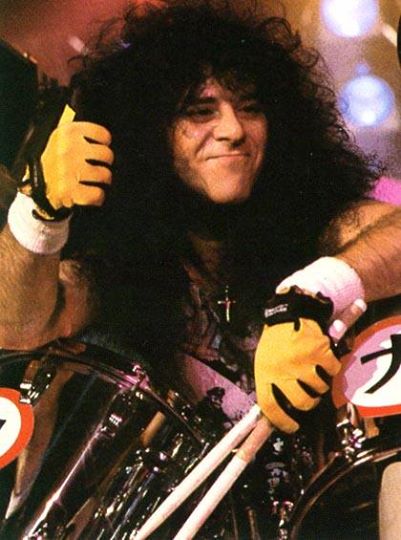
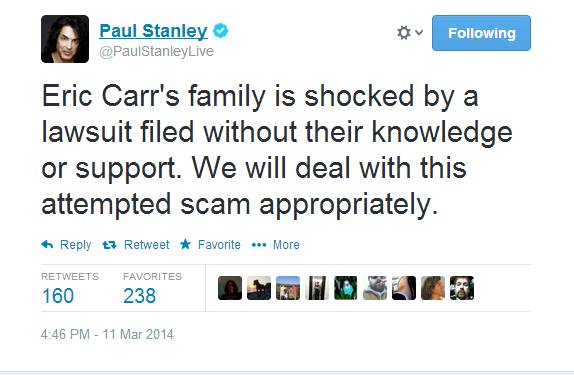
According to classicrockmagazine.com, KISS have been sued by the heirs of late drummer Eric Carr, who claim the band owe them 23 years of royalty payments.
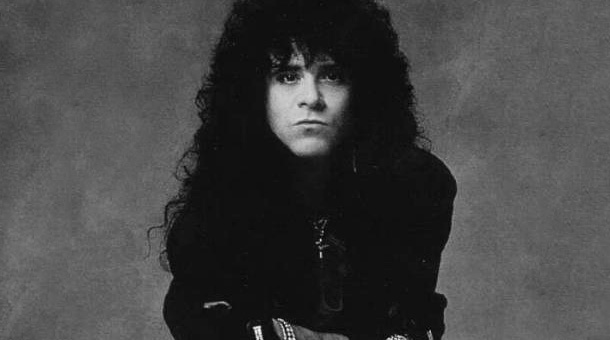
It’s alleged they failed to pay money due for four tracks he wrote during his 11-year stint, which ended with his death from cancer in 1991.
Attorney Robert Garson says the unnamed heirs believed they were receiving everything they were entitled to, and only recently discovered payments were due from sources other than the American Society of Composers, Authors and Publishers.
Garson tells the New York Post: “They thought they were getting it all from one source.” Now they believe more cash should have come from the Kiss corporation, Gene Simmons Worldwide and two Kiss publishing firms.
The dispute centres around the songs Little Caesar, Breakout, Carr Jam 1981 and Carr Jam 1991, all written by the drummer, whose real name was Paul Charles Caravello.
Among the evidence submitted to Manhattan Supreme Court is a 1989 payment for $4000 for overseas sales, and paperwork which, Garson says, proves the band attempted to avoid dealing with the issue by blaming touring schedules and overworked staff.
Meanwhile, Kiss frontman Paul Stanley has blamed the Rock And Roll Hall Of Fame for the band’s recent decision that no lineup would perform at their induction ceremony next month.
He and Gene Simmons made the announcement after it had been hoped original members Ace Frehley and Peter Criss would return for a one-off performance, with current men Tommy Thayer and Eric Singer also involved in some way.
Stanley tells Billboard: “They wanted the original four guys to play, in makeup. But, honestly, I don’t want to roll the dice and possibly negatively impact on what I personally have been involved in building for 40 years. I have too much invested at this point.
“It really is a can of worms that I feel is better off left closed. There’s been a lot of issues – perhaps the best way to deal with them is to celebrate the four original guys, go there, get our award and to look past the differences that will always be there.
“It doesn’t change the big picture: we have differences and we will continue to have differences.”





 Click image to watch the video


 Metal Shock Finland (World Assault )