
When you compose music using AI, what are you actually doing? Are you having someone else speak in your place? Are you just performing a cover of a piece of software? Are you really an artist? Is it the upheaval of the music industry that’s pushing artists to use it?
THE ROCK ALCHEMIST Guitarist, Beppe Geracitano tries to answer these uncomfortable questions in this article.
Artificial Intelligence and Creativity
My opinion is that AI applied to music composition doesn’t amplify creativity: it replaces it, and it does so in its own way. At first it might seem to widen your artistic horizons, but little by little it ends up replacing the work of your mind and your unconscious.
The software that creates music through artificial intelligence analyzes an enormous amount of already-existing songs: you give it three notes, tell it what kind of track you want, and through probabilistic calculations you get a result based on everything that’s already been done before. These systems have no consciousness or intuition: they work only according to the parameters they were trained on. The worrying thing is that they do it exceptionally well, and anyone can do it.
If you want to produce nonstop, assembly-line style, as if songs were rolls of toilet paper, you can absolutely do that. But you, who are supposed to be the artist, are you really sure you want emotions that should be your own to be expressed by someone else? You can do it, sure, easily and in a matter of minutes, but don’t say those songs are yours. It would take a bit of intellectual honesty and dignity, even though everyone remains free to live as they wish, of course.
There are even people who publish tracks entirely produced with AI that imitate the sound and voice of very popular artists: listeners think they’re hearing the real artist, but it’s just software. They do it to rack up streams by exploiting someone else’s artistic identity, and I find that musically sad, even appalling.
What Composing Means to Me
Personally, I need to compose music: it makes me feel good, and I do it first and foremost for my own wellbeing. If I had software do it for me, I wouldn’t have the same experience.
In composing, I try to communicate feelings, but not in a deliberate way. I simply follow my instinct, which leads me to choose one harmonic solution over another. And sometimes it’s precisely the mistake that gives you the thing you weren’t expecting, the thing that makes the difference!
Another important aspect is improvisation, because you switch your brain off and just play, without thinking about anything and even in those moments, things come out that you’d never have arrived at through rational thinking. And by the way, improvisation is one of those unique things in music that’s being lost; everyone wants everything safe, instant, already packaged and easy.
The connecting thread through all of this is there when, sometimes after years, you listen back to one of your own pieces and think: wow, what this song conveys to me today is exactly the state of mind I was in when I wrote and recorded it — and you get goosebumps. And that’s how a listener comes to know who you are and relive your feelings. This is how an artist reaches the listener.
It’s demanding work, certainly, because it’s a constant challenge with yourself, but that’s exactly what helps you improve, and also helps you find yourself.
How could a piece of software replace all that? Or rather: you, the artist, don’t you have a personality? Don’t you have things to express, to say, to communicate?
Someone might object: “But that’s how it’s done these days, you’re behind the times, people use it just as a helping hand too.”
Sure, that’s one way to do it. But in a few years your brain will be flattened: creativity has to be kept constantly trained, it’s like a muscle. There are mental processes you only learn to recognize over time, and the more you compose, the more you recognize them.
And then there’s the matter of creating something that has never existed before: if AI had existed in the ‘70s, bands like Black Sabbath probably would never have been born, because that kind of sound wasn’t in the databases. And it would never have been generated, because it wouldn’t have fit into the calculations of what can work. Instead, we all know how that turned out…
A Crucial Issue: Production Costs
There’s a fundamental aspect that most musicians don’t consider and that listeners almost certainly aren’t aware of: production costs.
The budgets available today are nothing like those of a few decades ago.
To give some numbers: full production costs — recording, mixing, mastering, artwork, photography, music videos, marketing and promotion — used to reach exorbitant sums. Bon Jovi’s Slippery When Wet (1986) cost around 3 million dollars; Metallica’s Black Album (1991) went as high as 7 million. Sums that were nonetheless amply repaid, because millions of physical copies were sold.
From 2000 onward — which I consider the year zero of music, with the arrival of digital distribution — financial returns became laughable compared to the past, at times almost nonexistent, and those pharaonic budgets vanished. That’s also part of why big concert tickets cost so much today: current investments have to be recouped somehow.
Today, 1 million streams earns you around 3,000 dollars, which then has to be split among the record label, the band, the collaborators, and on top of that you have to pay taxes. What’s left for you? And above all… who manages to hit those numbers, consistently? Ask yourselves some questions, and do the math, next time TV announces that some singer has racked up millions of streams on the platforms. That’s the reality.
Now, if you want to produce music at a high level, you have to find different solutions: reduced costs, highly efficient systems.
The arrival of software, home studios, plugins, and many other tools with an excellent price-to-quality ratio has helped enormously many artists in their creative and production work.
Today there is software capable of digitally emulating, on average at 95%, hardware equipment that used to be found only in big recording studios at very high costs and on this front I’m entirely in favor of technology, because it’s the only way to make up for a lack of budget.
To give an example from my own experience: I handled almost all the recording of the album Lead Love and Gold by my band The Rock Alchemist, as well as production and mixing. Partly because I enjoy doing it, and partly because today an artist has to be able to handle almost every aspect, 360 degrees around, if they want to keep their work going. Unless, of course, your name happens to be Lady Gaga or Metallica.
Where the Tool Ends and Something Else Begins
In this scenario, AI is certainly a support: it helps automate all kinds of processes, speeds up research, lets you understand in a very short time how a piece of software or hardware works. I see it as an enormous library with ultra-fast access to information.
It’s true that many of these tasks could be done by people, but if I can’t afford to pay someone, that someone simply won’t be able to collaborate with me anyway. And today, in 2026, you’re almost forced to use these tools, because for almost everyone the alternative is to essentially stop working altogether.
But with artificial intelligence, things are going further than that.
It’s not a simple effect, as many say, nor a technological innovation that lets you experiment with new solutions or sounds. There has always been controversy around new technologies, but that has nothing to do with this, and it’s honestly ridiculous to think of it that way!!
AI is an epochal step for humanity, perhaps yet another year zero, and you don’t really grasp its power, for better or worse, until you see with your own eyes how it goes about replacing something you do yourself, something it took you years and years to learn.
Governments and multinational corporations are investing billions of dollars to develop it: it cannot be compared, as some artists — even famous ones — do, to the invention of distortion or the synthesizer, because those were tools that let you express yourself differently, not be replaced entirely.
There’s one last aspect worth considering. Over the years, record productions have chased executional perfection, largely thanks to software, and listeners have grown used to music with not the slightest imperfection. The next step, the one we’re at today with AI, has made it possible to generate entire songs with musicians and singers who don’t exist in reality and paradoxically, in terms of performance and production, the listening sensation is very similar to that of the “perfect” tracks of recent years. As a result, for many non-specialist listeners it’s now practically impossible to tell the difference between what we might call a real, polished production and a fake one.
What Future?
So what do we do now? Are we at a turning point?
How the future will unfold, nobody knows. Probably part of humanity will stay on the side of human feeling, the side that appreciates “human” imperfections; another part won’t even notice the difference, or will consider imperfection as incompetence. But evolutionary steps themselves are mistakes, or deviations from rules and standards. So, then?
In the end, what will call the shots will probably be nature. Because nature, one way or another, always wins in the end.
And perhaps the only real limit to the evolution and use of artificial intelligence will be the availability of energy on planet Earth (still just my personal opinion, as is everything written here, for that matter).
Deep down, I want to believe that human art, if it has that right “magic” that only art itself can give, will always somehow manage to touch people’s souls. The world is also made of things we can’t always explain, and that we’re still not able to calculate. Human beings will always, in some way, be able to make the difference.
What will happen, we’ll find out in a few years. In the meantime, wishing everyone good art.
~ Beppe Geracitano
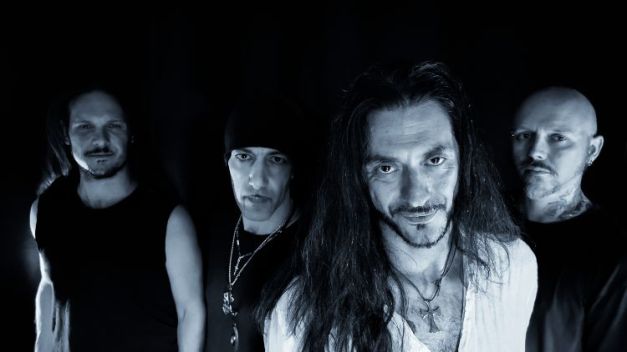
LATEST BAND NEWS:
Just recently THE ROCK ALCHEMIST released their live performance videos for ‘Limitless’ & ‘Passion Drives You Over’, taken from the band’s latest album “Lead, Love and Gold”, released in 2024 via Lion Music.
The live performance videos were recorded during their concert on February 28, 2026, at the auditorium of Magazzini Musicali Merula, one of the largest musical instrument stores in Europe. Mixed by Beppe Geracitano.
The band stated:
“No autotune, no samples, and no overdubbing. Just a keyboard backing track.
We care about keeping live music as pure and real as possible.
Considering how technology is overused in 2026, even on stage, we think it’s important to speak up!”
Watch the live videos here:
‘Passion Drives You Over’: https://www.youtube.com/watch?v=zAIdbAKvy9Q
‘Limitless’: https://youtu.be/Jrh-LFXWJoI?si=sOUNco1P46r8ubEb
More on THE ROCK ALCHEMIST:
THE ROCK ALCHEMIST – formed in 2009 – Italian Rock Band from Turin with a strong sonic identity that blends modern rock with progressive, hard, alternative, and pop elements. With a contemporary and refined sound, the band has built an international following, particularly in Finland, USA, Spain, France, Brazil, Germany, Poland, and Canada.
Their music is born from a balance of emotional impact, technical skill, and production quality. Over the years, they have also connected their image to the world of motorsport and F1, becoming the first rock band to perform on the podium of the Monza Circuit during the awards ceremony of the 2015 Monza Rally Show. Several of their tracks have been used as soundtracks in TV features for programs such as Griglia di Partenza, and on channels like Eurosport or RTBF Belgium.
Their songs have also received international rock radio airplay, being broadcast on various stations in several countries, including the USA, Poland, and France (Virgin Radio France).
Latest focus videos to check out:
Live Or Die – Ayrton Senna Tribute (Eyes Of Mind 2012): https://www.youtube.com/watch?v=lT6zcO8cvEY
Imagine (Live at FIM 2015) https://youtu.be/Tt0hAqsbs40?si=vHzR_8922OYQUxe8
Panic Room (Elements 2017) https://youtu.be/hn6F3jfT-Mc?si=QGOJSunYRnDss127
Cars (Elements 2017) https://youtu.be/N8I2yRSKwA8?si=MOXsOvnZzS8r7Wei
American Woman (2019) https://youtu.be/ChXV2C5aUjw?si=V2qNl-AR7RdBL7RB
All I Want For Christmas Is You (2021) https://youtu.be/ocNBmWcPGjw?si=SHLpGzWi_p2KyP-o
Passion Drives You Over (Lead Love and Glod 2024) https://www.youtube.com/watch?v=AZiutnHzHRI
Line-up:
Aldo Garrone – Vocals
Beppe Geracitano – Guitars
Raoul Ronco – Bass
Max Gordiani – Drums
More info:
Web: https://www.therockalchemist.it
Facebook: https://www.facebook.com/p/The-Rock-Alchemist-100063482113095/
Instagram: https://www.instagram.com/therock_alchemist/
X: https://x.com/rock_alchemist
Tik Tok: https://www.tiktok.com/@therockalchemistband



 Metal Shock Finland (World Assault )