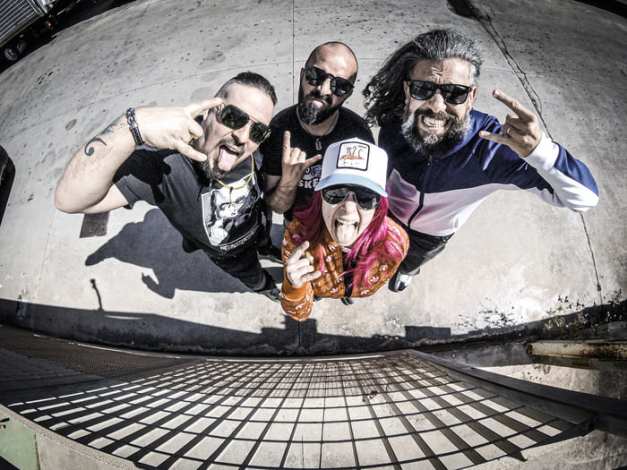
SOULS OF DIOTIMA released their fifth full-length album “Arcade” on October 2nd via Diotima Records, available exclusively on digital platforms! With “Arcade”, Souls of Diotima take their boldest leap yet. The band’s backbone transforms into a highly contemporary Modern Metalcore, enriched with brand-new elements: electronic arpeggiators, analog oscillators, and 80s synth retrowave atmospheres interwoven with devastating breakdowns and seismic rhythm sections.
Metal Shock Finland recently had the pleasure of interviewing the band’s guitarist and co-vocalist, Fabio Puddu. Join the conversation below.
THE SHIFT IN SOUND
1. “Arcade” is described as a historic move from power metal roots to modern metalcore. What made you decide the time had come, and was there a specific moment or song that tipped it?
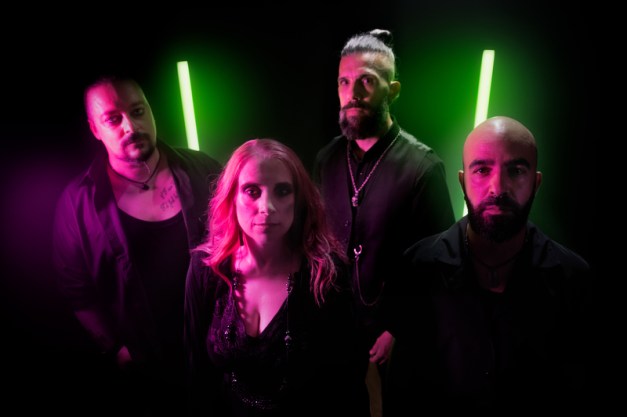
The change happened quite naturally. We felt it was time for a breath of fresh air, a new chapter that could better represent not only our musical identity, but also who we are in our everyday lives. This evolution is reflected not only in the music, but also in our overall image and outfits. We wanted everything to feel more authentic and connected to who we are today. Of course, this doesn’t mean rejecting our past or forgetting the old Souls of Diotima. That period is an important part of our history, and everything we’ve done has helped us become the band we are now.
2. Did you worry about losing longtime fans, or gaining new ones who don’t know your earlier albums?
Our longtime fans know how we like to approach music, and we’re confident they’ll understand and appreciate this evolution. We’ve always believed in following our artistic instincts rather than staying within the same boundaries. At the same time, this new direction was also an opportunity to reach a wider audience and connect with people who may not have discovered Souls of Diotima before. For us, it’s about growing, exploring new possibilities, and staying true to who we are as a band.,
3. What did you keep from the power metal years, even if it’s hidden under the downtuned riffs?
What has remained is the very soul of our songwriting. The sound has evolved, the riffs have become heavier and the overall approach has changed, but the core of our compositional identity is still there. It’s part of who we are as Souls of Diotima, regardless of the musical direction we explore.

SYNTHS AND THE ARCADE CONCEPT
4. Arpeggiators, analog oscillators, retrowave: who in the band brought the synths in, and what gear or records inspired that sound?
The idea of incorporating synths came from Giorgio Pinna, and as a band, we worked together to figure out which sounds would best fit our vision. Many modern metal bands use synths nowadays, but finding the right inspiration for the retrowave element was a different challenge. We wanted to create something that felt fresh and distinctive, combining that retro-inspired atmosphere with modern metal. In the end, we believe this blend has allowed us to bring an original idea to our sound.
5. Neon lights and vintage arcade nostalgia against dark, introspective lyrics: why that contrast? Do you have personal arcade memories?
We’re a band made up of members of different ages, but fortunately, we’ve all experienced those nostalgic years of arcade halls and fluorescent neon lights. When we were younger, those places created a kind of magic that has stayed with us over time. Combining that atmosphere with the lyrics turned out to be both unusual and surprisingly natural. Many of the songs deal with deeply personal themes, so the contrast between the colorful, nostalgic aesthetic and the darker emotional side of the music created an interesting balance.
6. If “Arcade” were a game, what would it be, and what’s the final boss?
If Arcade were a video game, it would probably be a mix of a classic platform game like Super Mario and a much darker, more atmospheric world. There’s something fascinating about the contrast between the colorful, nostalgic universe of old-school video games and the darker themes explored in our lyrics. As for the final boss, it would probably be something more than just a monster to defeat. It could represent our inner demons, fears, and personal struggles. And unlike in a video game, defeating them isn’t always as simple as reaching the end of a level!
VOCALS AND “CAGE”
7. Fabio’s scream in the verses against Claudia’s melodic choruses is the heart of “Cage”. How do the two of you decide who takes which part? Does it change how you write?
In “Cage,” the contrast between the harsh vocals in the verses and Claudia’s melodic choruses became a key element of the song. We usually build the music first and decide how to distribute the vocal parts afterward. We look for the approach that works best for each section, making the most of both vocal styles. This process allows us to create different dynamics and emotional shades, moving between aggression and melody. The voices don’t compete with each other; they complement one another, becoming an essential part of the song’s identity.
8. “Cage” is about being trapped in an inner hell. How personal is it, and how do you handle singing it night after night?
“Cage” is a very personal song for me. It explores a darker side of my life that I often struggle to accept and express, even with the people closest to me. Music gave me the opportunity to bring those feelings to the surface. Writing this song wasn’t just a way to release those emotions, but also a way to send a message to anyone who might relate to them: we all have our own inner demons, and even if facing them isn’t easy, we shouldn’t stop trying to fight them.
Performing the song live means reliving some of those experiences every night. But there’s also a small sense of happiness in being able to tell that story through music. What once felt difficult to express has become something I can share with others, and that gives the song an even deeper meaning.
9. Why did you pick “Cage” as the manifesto of the album?
“Cage” brings together all the elements behind the band’s transformation: heavy riffs, retrowave synths, and melancholic passages. It captures the different sides of our new sound and shows how these elements can coexist and complement each other. Along with other tracks on “Arcade,” it represents the musical identity we want to develop further and carry into our future albums.
WRITING AND PRODUCTION
10. How was the album written and recorded, and what did the modern production change about your process?
The album was composed by Giorgio Pinna and me, with the whole band actively involved in developing the arrangements. Everyone contributed to shaping the songs and bringing the ideas to life. The album was recorded at Bohus Studio in Sweden, and the modern production definitely helped us achieve a heavier sound, reinforcing the impact of the riffs while supporting the new direction we wanted to explore with “Arcade.”
11. The tracklist runs from “Warning!” to “Nocturnal Vibe”. How did you plan the album’s arc, and why that closer?
We played the songs countless times before entering the studio, but we hadn’t decided on a definitive tracklist yet. We finalized the running order while we were in Sweden, carefully considering how each song would flow into the next. We wanted to create a dynamic listening experience, keeping the album engaging and surprising from the opening track to the very last one. The goal was to make the whole record flow naturally, while giving each song its own space and contributiva to the overall journey of “Arcade.”
12. “Senza Rancore” has an Italian title. How does your Italian identity show up in the music or lyrics?
We know that the Italian language is appreciated internationally, and we wanted to preserve a part of our cultural identity by including a song with lyrics in our mother tongue. On our previous album, “Janas,” we incorporated vocals in Sardinian, as it was a concept album dedicated to Sardinia and its culture. With “Senza Rancore,” we wanted to continue expressing our roots in a different way, keeping that connection to our identity while exploring the modern sound of “Arcade.”
THE BAND AND THE BUSINESS
13. You release on your own label, Diotima Records. Why self-release, and what has that meant for creative control?
Having our own label, Diotima Records, gives us something invaluable: creative freedom and control over our artistic direction. This is also connected to the message behind “Senza Rancore,” which reflects some of our thoughts on the current music industry and the way it works. We believe that being independent allows us to make decisions based on what we truly believe in as artists, rather than having to compromise our vision. It’s not about being against record labels, but about having the freedom to choose our own path and take responsibility for our decisions. For us, that freedom is priceless.
14. You released three singles before the album, then “Cage” on release day. What did that rollout teach you about reaching listeners today?
With “Run Away,” our first single, we announced the release in advance, while the following singles came out without prior notice. We believe that surprise can be a powerful tool in today’s music landscape. Sometimes, an unexpected release can hit like an explosion, catching people off guard and creating an immediate impact. There’s no single formula for reaching listeners, and we like the idea of keeping things unpredictable. Ultimately, it’s about finding different ways to capture people’s attention and letting the music speak for itself.
15. The album is digital-only for now. Is there any chance of vinyl or CD, or is streaming the plan?
For now, “Arcade” is available exclusively in digital format. We don’t want to raise expectations or make promises we can’t guarantee, but releasing the album on CD or vinyl is definitely something we’d love to do. We know how special physical releases can be for both bands and fans, so we really hope we’ll have the opportunity to make it happen in the future.
LIVE AND FUTURE
16. You start in March with France, Belgium and the Netherlands. How will you bring the synth layers to the stage, with tracks or live keys?
The synth parts will be played through backing tracks, using the same elements recorded for the album. This allows us to preserve the electronic layers and retrowave atmosphere that are such an important part of “Arcade,” while keeping the live performance focused on the band’s instruments and vocals.
17. What’s the first thing you want to hear from a crowd at Le Stock, Club Hell or Popei?
More than anything, we’d love to feel a genuine connection with the crowd. Seeing people go wild, sing along to the choruses, and really connect with our music would be amazing. For us, it’s not just about playing the songs live, but about sharing that energy with the audience and feeling that the music means something to them.
18. Any chance of Finland? Do you have a connection to Nordic metal, and how do you see the Finnish scene?
We love Northern Europe, and we’d absolutely love to play in Finland as well. Our connection with Nordic metal is reflected in our decision to record several albums in Sweden. It’s not just about the quality of the studios, but also about the atmosphere you experience in the North, which has always fascinated us. On a personal level, Finnish bands have also played an important role in shaping my musical influences. The Nordic metal scene has a character of its own, and being able to experience it firsthand as a band would be something really special.
QUICK-FIRE CLOSERS
19. Favorite retro arcade game?
On a personal level, I’d probably say Metal Slug and Super Mario. They’re very different games, but both have that timeless retro charm that makes them unforgettable.
20. One album that changed how you think about metal?
Only one? Hahaha, that’s a really difficult question! I’d probably have to mention “Follow the Reaper” by Children of Bodom, which also explains my connection to Finland and its metal scene. But I can’t leave out “The Sound of Perseverance” by Death. Both albums radically changed the way I think about metal, although in very different ways. So, if I really have to choose just one… I’m afraid I’ll have to break the rules a little!
“Arcade” Tracklist:
Warning!
Revenge
Deadline
Black Rose
Run Away
Time is a Flame
A Child
Senza Rancore
Head Up, Guard Up
Cage
Nocturnal Vibe
Stream & Buy Album “Arcade” : https://sod.bfan.link/arcade
Watch:
‘Cage’ official video : https://youtu.be/2MVN6ZewS_c
‘Senza Rancore’ lyric video: https://www.youtube.com/watch?v=g-hXcVkWznk
‘Revenge’ visualizer: https://youtu.be/4YZmVTgGET0
‘Run Away’ official video: https://youtu.be/3Y2aimEFloI
FIRST EUROPEAN DATES
March 19 : France, Mennecy @ Le Stock
March 20 : Belgium, Diest @ Club Hell
March 21 : Netherlands, Eindhoven @ Popei
(More dates to be announced soon)
Souls of Diotima are:
Claudia Barsi: voice
Giorgio Pinna: drums
Fabio Puddu: guitars + vocals
Manuel Dettori: bass
Official Linktree : https://linktr.ee/soulsofdiotimaofficial