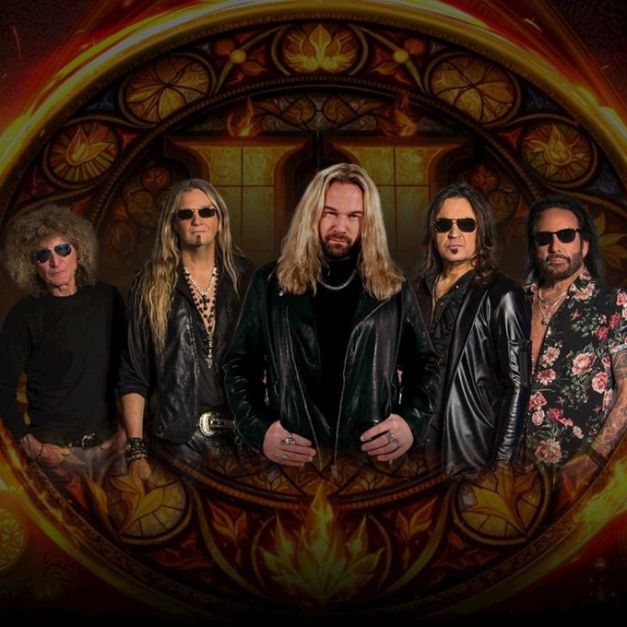
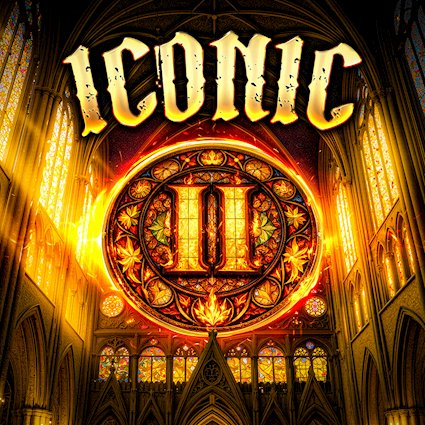
Hard rock supergroup ICONIC – featuring Michael Sweet (guitars), Joel Hoekstra (guitars), Marco Mendoza (bass), Tommy Aldridge (drums), and Nathan James (vocals) – proudly releases their sophomore album ‘II,’ out on now via Frontiers Music Srl. To celebrate the release, the band also shares the new single, “Heart Of Stone,” alongside an official video, available below.
Joel Hoekstra comments on the new single:
“‘Heart Of Stone’ has a catchy melody delivered beautifully by Nathan James. It was a pleasure to write the riffs for this one, and of course to record them and dig deep for the solo. Hope everyone likes it!”
Michael Sweet adds:
“We couldn’t be more excited to release ‘Heart Of Stone.’ To be able to create music with such amazing musicians and then know that this music is inspiring people around the world is such a blessing! I hope you enjoy ‘Heart Of Stone’!”
“Another great track! This album has got some gems, this one is no exception!! Enjoy rock & roll at its finest!,” continues Marco Mendoza.
ICONIC returns with ‘II,’ a second album that doesn’t just continue the band’s journey – it defines it. Where their debut introduced the chemistry between five world-class musicians, II sharpens that vision into a clearer, heavier, and more confident sonic identity, delivering a sound that is more powerful, more direct, and unmistakably rock.
At the heart of the album lies the electrifying guitar partnership of Joel Hoekstra and Michael Sweet, delivering a masterclass in soaring melodies, blazing solos, and muscular riffs that perfectly balance technical brilliance with pure hard-rock attitude. Beneath them, the rhythm section of Tommy Aldridge and Marco Mendoza drives the record with thunderous authority, creating a groove that is both massive and relentless.
The album kicks off with “Cry No More,” a high-octane opener that immediately sets the tone – an energetic slice of hard rock packed with driving riffs, explosive drums, and a chorus built to stick.
On the other side of the emotional spectrum, “Tears Keep On Falling” showcases the band’s dynamic range, unfolding as an electrifying power ballad where melody, atmosphere, and intensity come together in dramatic fashion.
Towering above it all is Nathan James, whose performance on ‘II’ is nothing short of extraordinary – powerful, soulful, and commanding, elevating every track with unmistakable presence.
With bigger riffs, deeper grooves, and a stronger sense of identity, ‘II’ captures ICONIC at full force: a band no longer introducing itself but fully owning its sound.
When you compose music using AI, what are you actually doing? Are you having someone else speak in your place? Are you just performing a cover of a piece of software? Are you really an artist? Is it the upheaval of the music industry that’s pushing artists to use it?
THE ROCK ALCHEMIST Guitarist, Beppe Geracitano tries to answer these uncomfortable questions in this article.
Artificial Intelligence and Creativity
My opinion is that AI applied to music composition doesn’t amplify creativity: it replaces it, and it does so in its own way. At first it might seem to widen your artistic horizons, but little by little it ends up replacing the work of your mind and your unconscious.
The software that creates music through artificial intelligence analyzes an enormous amount of already-existing songs: you give it three notes, tell it what kind of track you want, and through probabilistic calculations you get a result based on everything that’s already been done before. These systems have no consciousness or intuition: they work only according to the parameters they were trained on. The worrying thing is that they do it exceptionally well, and anyone can do it.
If you want to produce nonstop, assembly-line style, as if songs were rolls of toilet paper, you can absolutely do that. But you, who are supposed to be the artist, are you really sure you want emotions that should be your own to be expressed by someone else? You can do it, sure, easily and in a matter of minutes, but don’t say those songs are yours. It would take a bit of intellectual honesty and dignity, even though everyone remains free to live as they wish, of course.
There are even people who publish tracks entirely produced with AI that imitate the sound and voice of very popular artists: listeners think they’re hearing the real artist, but it’s just software. They do it to rack up streams by exploiting someone else’s artistic identity, and I find that musically sad, even appalling.
What Composing Means to Me
Personally, I need to compose music: it makes me feel good, and I do it first and foremost for my own wellbeing. If I had software do it for me, I wouldn’t have the same experience.
In composing, I try to communicate feelings, but not in a deliberate way. I simply follow my instinct, which leads me to choose one harmonic solution over another. And sometimes it’s precisely the mistake that gives you the thing you weren’t expecting, the thing that makes the difference!
Another important aspect is improvisation, because you switch your brain off and just play, without thinking about anything and even in those moments, things come out that you’d never have arrived at through rational thinking. And by the way, improvisation is one of those unique things in music that’s being lost; everyone wants everything safe, instant, already packaged and easy.
The connecting thread through all of this is there when, sometimes after years, you listen back to one of your own pieces and think: wow, what this song conveys to me today is exactly the state of mind I was in when I wrote and recorded it — and you get goosebumps. And that’s how a listener comes to know who you are and relive your feelings. This is how an artist reaches the listener.
It’s demanding work, certainly, because it’s a constant challenge with yourself, but that’s exactly what helps you improve, and also helps you find yourself.
How could a piece of software replace all that? Or rather: you, the artist, don’t you have a personality? Don’t you have things to express, to say, to communicate?
Someone might object: “But that’s how it’s done these days, you’re behind the times, people use it just as a helping hand too.”
Sure, that’s one way to do it. But in a few years your brain will be flattened: creativity has to be kept constantly trained, it’s like a muscle. There are mental processes you only learn to recognize over time, and the more you compose, the more you recognize them.
And then there’s the matter of creating something that has never existed before: if AI had existed in the ‘70s, bands like Black Sabbath probably would never have been born, because that kind of sound wasn’t in the databases. And it would never have been generated, because it wouldn’t have fit into the calculations of what can work. Instead, we all know how that turned out…
A Crucial Issue: Production Costs
There’s a fundamental aspect that most musicians don’t consider and that listeners almost certainly aren’t aware of: production costs.
The budgets available today are nothing like those of a few decades ago.
To give some numbers: full production costs — recording, mixing, mastering, artwork, photography, music videos, marketing and promotion — used to reach exorbitant sums. Bon Jovi’s Slippery When Wet (1986) cost around 3 million dollars; Metallica’s Black Album (1991) went as high as 7 million. Sums that were nonetheless amply repaid, because millions of physical copies were sold.
From 2000 onward — which I consider the year zero of music, with the arrival of digital distribution — financial returns became laughable compared to the past, at times almost nonexistent, and those pharaonic budgets vanished. That’s also part of why big concert tickets cost so much today: current investments have to be recouped somehow.
Today, 1 million streams earns you around 3,000 dollars, which then has to be split among the record label, the band, the collaborators, and on top of that you have to pay taxes. What’s left for you? And above all… who manages to hit those numbers, consistently? Ask yourselves some questions, and do the math, next time TV announces that some singer has racked up millions of streams on the platforms. That’s the reality.
Now, if you want to produce music at a high level, you have to find different solutions: reduced costs, highly efficient systems.
The arrival of software, home studios, plugins, and many other tools with an excellent price-to-quality ratio has helped enormously many artists in their creative and production work.
Today there is software capable of digitally emulating, on average at 95%, hardware equipment that used to be found only in big recording studios at very high costs and on this front I’m entirely in favor of technology, because it’s the only way to make up for a lack of budget.
To give an example from my own experience: I handled almost all the recording of the album Lead Love and Gold by my band The Rock Alchemist, as well as production and mixing. Partly because I enjoy doing it, and partly because today an artist has to be able to handle almost every aspect, 360 degrees around, if they want to keep their work going. Unless, of course, your name happens to be Lady Gaga or Metallica.
Where the Tool Ends and Something Else Begins
In this scenario, AI is certainly a support: it helps automate all kinds of processes, speeds up research, lets you understand in a very short time how a piece of software or hardware works. I see it as an enormous library with ultra-fast access to information.
It’s true that many of these tasks could be done by people, but if I can’t afford to pay someone, that someone simply won’t be able to collaborate with me anyway. And today, in 2026, you’re almost forced to use these tools, because for almost everyone the alternative is to essentially stop working altogether.
But with artificial intelligence, things are going further than that.
It’s not a simple effect, as many say, nor a technological innovation that lets you experiment with new solutions or sounds. There has always been controversy around new technologies, but that has nothing to do with this, and it’s honestly ridiculous to think of it that way!!
AI is an epochal step for humanity, perhaps yet another year zero, and you don’t really grasp its power, for better or worse, until you see with your own eyes how it goes about replacing something you do yourself, something it took you years and years to learn.
Governments and multinational corporations are investing billions of dollars to develop it: it cannot be compared, as some artists — even famous ones — do, to the invention of distortion or the synthesizer, because those were tools that let you express yourself differently, not be replaced entirely.
There’s one last aspect worth considering. Over the years, record productions have chased executional perfection, largely thanks to software, and listeners have grown used to music with not the slightest imperfection. The next step, the one we’re at today with AI, has made it possible to generate entire songs with musicians and singers who don’t exist in reality and paradoxically, in terms of performance and production, the listening sensation is very similar to that of the “perfect” tracks of recent years. As a result, for many non-specialist listeners it’s now practically impossible to tell the difference between what we might call a real, polished production and a fake one.
What Future?
So what do we do now? Are we at a turning point?
How the future will unfold, nobody knows. Probably part of humanity will stay on the side of human feeling, the side that appreciates “human” imperfections; another part won’t even notice the difference, or will consider imperfection as incompetence. But evolutionary steps themselves are mistakes, or deviations from rules and standards. So, then?
In the end, what will call the shots will probably be nature. Because nature, one way or another, always wins in the end.
And perhaps the only real limit to the evolution and use of artificial intelligence will be the availability of energy on planet Earth (still just my personal opinion, as is everything written here, for that matter).
Deep down, I want to believe that human art, if it has that right “magic” that only art itself can give, will always somehow manage to touch people’s souls. The world is also made of things we can’t always explain, and that we’re still not able to calculate. Human beings will always, in some way, be able to make the difference.
What will happen, we’ll find out in a few years. In the meantime, wishing everyone good art.
~ Beppe Geracitano
Photo credit: Beppe Geracitano
LATEST BAND NEWS:
Just recently THE ROCK ALCHEMIST released their live performance videos for ‘Limitless’ & ‘Passion Drives You Over’, taken from the band’s latest album “Lead, Love and Gold”, released in 2024 via Lion Music. The live performance videos were recorded during their concert on February 28, 2026, at the auditorium of Magazzini Musicali Merula, one of the largest musical instrument stores in Europe. Mixed by Beppe Geracitano.
The band stated: “No autotune, no samples, and no overdubbing. Just a keyboard backing track. We care about keeping live music as pure and real as possible. Considering how technology is overused in 2026, even on stage, we think it’s important to speak up!”
More on THE ROCK ALCHEMIST: THE ROCK ALCHEMIST – formed in 2009 – Italian Rock Band from Turin with a strong sonic identity that blends modern rock with progressive, hard, alternative, and pop elements. With a contemporary and refined sound, the band has built an international following, particularly in Finland, USA, Spain, France, Brazil, Germany, Poland, and Canada.
Their music is born from a balance of emotional impact, technical skill, and production quality. Over the years, they have also connected their image to the world of motorsport and F1, becoming the first rock band to perform on the podium of the Monza Circuit during the awards ceremony of the 2015 Monza Rally Show. Several of their tracks have been used as soundtracks in TV features for programs such as Griglia di Partenza, and on channels like Eurosport or RTBF Belgium.
Their songs have also received international rock radio airplay, being broadcast on various stations in several countries, including the USA, Poland, and France (Virgin Radio France).
Today, the band Ibridoma are releasing the cover art designed by Gustavo Sazes, the tracklist for their new album “Sangue Innocente” – due out on Punishment18 Records digitally on 28 August and on physical formats on 25 September – and the video for “Sangue Innocente” (the first single from the album of the same name) featuring GIACOMO VOLI of Rhapsody of Fire. Watch the video below.
In the song, Ibridoma explain, “we tackle a theme that is often in the spotlight in our society: indifference. This is how we now experience the tragedies around us; detachment and coldness are our motto until we are directly affected. Families killed, cities destroyed, weapons of mass destruction, hatred between nations – our world is ablaze, and looking the other way won’t solve the problem. Change must start with ordinary people; it’s time to say no to war and to stop those who grow richer every day through war!”
Below is the tracklist for “Sangue Innocente”:
Realize Childhood Denied Sangue Innocente The Gambler Sole Freddo The Other Side Occhi Vuoti A.I. Sing in The Sky Ho dimenticato
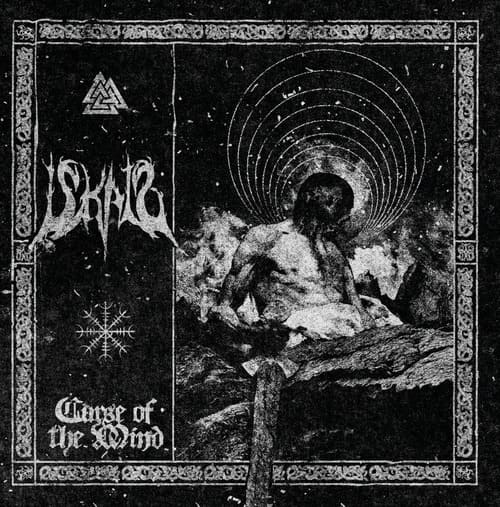
Norwegian melodic black metal veterans ISKALD return with “Curse of the Mind”, their sixth full-length album and the band’s first-ever concept record, set for release on September 25th through Dusktone.
Following the acclaimed “Innhøstinga” (2018), the new album marks the beginning of a new chapter for the band after signing with Dusktone in early 2026. Available on colored LP, black LP, CD Box and CD, “Curse of the Mind” was recorded during the summer of 2025 at Strand Studio in Beiarn, mixed and mastered by Hallstein Sandvin, and features artwork by SG7 Graphics.
For over two decades, ISKALD have stood among the leading names in Norwegian melodic black metal. Now performing as a five-piece, the band expands its trademark northern sound with its most ambitious and immersive work to date.
Built as a conceptual journey, “Curse of the Mind” unfolds through four interconnected chapters linked by ritualistic invocations, exploring themes of psychological torment, inner conflict, fragile hope and ultimate sacrifice. Framed within a stark, Norse-inspired vision of Helheim, the story is mythological in setting but deeply psychological at its core. Helheim is not merely a place, it is the shape taken by inner darkness. The true battlefield is the mind itself.
The album unfolds in four movements, connected by four ritual Invocations:
I. The Other Realm – The Descent Vast emptiness, fog and isolation.
II. Manifestation of Madness – The Prison Doubt, fragmentation and psychological collapse.
III. A Burden of Hope – The Fragile Light Strength found through accepting the darkness within.
IV. The Sacrifice – The Ritual Before the throne of Hela, suffering becomes meaningful.
Tracklist:
1. Curse of the Mind – Invocation I 2. The Other Realm 3. Curse of the Mind – Invocation II 4. Manifestation of Madness 5. Curse of the Mind – Invocation III 6. A Burden of Hope 7. Curse of the Mind – Final Invocation 8. The Sacrifice
Line-up:
Aage Krekling – Vocals Simon Larsen – Guitars Ben Hansen – Guitars Isak Larsen – Drums Tobias Aubert – Bass
Pre-orders will be announced soon, together with the first audio preview from the album, offering listeners an initial glimpse into the dark and immersive world of “Curse of the Mind”.
ISKALD were formed in 2005 in Sortland, Northern Norway, by Simon Larsen and Aage Krekling, with the ambition of creating a distinctive form of melodic black metal deeply connected to the atmosphere of the Arctic north. After the self-released “Northern Twilight” EP, the band gained international attention with their debut album “Shades of Misery” (2007), establishing themselves as one of the most promising acts in the Norwegian scene.
Throughout their career, ISKALD have developed a sound where cold melodies, aggression and atmospheric depth coexist, drawing inspiration from nature, Norse heritage and existential themes. Their discography includes acclaimed albums such as “Revelations of Reckoning Day” (2008), “The Sun I Carried Alone” (2011), “Nedom og Nord” (2014) and “Innhøstinga” (2018), each marking a further evolution of their artistic vision.
Having performed at festivals including Inferno Festival, Midgardsblot, Hove Festival and by:Larm, and shared stages with major names in extreme metal, ISKALD now enter a new phase with Dusktone. The partnership leads to the release of “Curse of the Mind”, their sixth full-length album and first concept record, arriving in 2026.
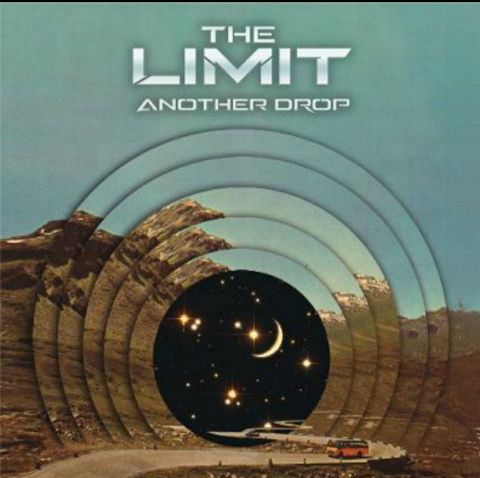
The Limit have unveiled the captivating new video for their third single, ‘Sidetracked’, taken from their explosive forthcoming album, Another Drop, released today via Silver Lining Music. Listen and order now at this location.
‘Sidetracked’ is a fast-paced anthem, fueled by relentless drive. Driven by infectious riffs and a powerful rhythm, the track embodies the raw and unmistakable spirit of The Limit: urgent, unfiltered and unapologetically authentic rock ‘n’ roll.
“Yeah! The song ‘Sidetracked’ – I Love the blood thirsty Rock ‘n’ Roll groove and grind of this one!” comments founder, guitarist and primary song-writer Sonny Vincent. “And I absolutely adore the melody Bobby came up with, for the break, where we sing: ‘Vagabonds but never done, play another day in the Sun’. It’s one of my favourite parts of all time (if I must say so myself!) For some reason it hits me everywhere. Check it out and you too will be floored.”
Watch/Listen to ‘Sidetracked’here – video filmed and edited by Bob Sweeney.
To celebrate the release of Another Drop, The Limit take to the stage an exclusive performance at the legendary, sold-out Wacken Open Air festival in Germany on 1st August. For performance times and more information, visit: wacken.com.
In your face, vital and visceral, The Limit are a super-charged collision of hard-edged genres. The new album, Another Drop is a record that doesn’t sit comfortably alongside anything else: it stands apart. It’s a sound that refuses to sit in one lane, connecting just as strongly with punk, hard rock and metal fans alike, tapping into a shared instinct that resonates across scenes and generations. Songs like ‘Another Drop of Blood’ push forward with a confrontational intensity that refuses to let go. There’s sweat, smoke, and grime running through raucous cuts like ‘Tryptophan’, the low-slung drive of ‘Sidetracked’, and the defiant surge of ‘Unchained’. Each track delivered with a clarity of purpose and a refusal to overcomplicate what should hit hard and fast.
Watch/Listen to the band’s recently released singles ‘Part Two, Screw You’ and ‘Another Drop of Blood’here. ‘Part Two, Screw You’ video produced by Sonny Vincent and Alex Schwers; edited by Johannes Fritsche. ‘Another Drop of Blood’ video edited and compiled by Johannes Fritsche.
Another Drop doesn’t just celebrate rock ‘n’ roll, it reasserts its core values. This is music made with integrity, and with a deep-rooted understanding of what gives it life in the first place. In an age of overproduction and imitation, The Limit strip everything back to the essentials and remind you what it feels like when it’s done right.
Another Drop is out now and available on Limited Edition 12” Splattered Vinyl, 12” Black Vinyl, CD Digipak, Digital Download, Streaming and special D2C bundles. Listen and order now at this location.
Another Drop Track Listing:
Another Drop of Blood
Don’t Say Try
Reverb in My Soul
Know Your Indecision
(Just A) Calling Card
Social Eyes
Stalemate
Sidetracked
Part Two, Screw You
Over a Cliff
Cause of Mystery
Fall Down, Get Up
Panzer
Tryptophan
Unchained
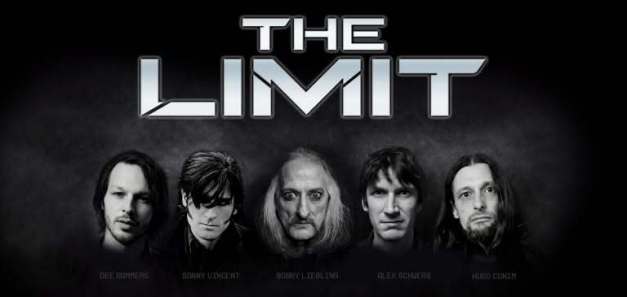
The Limit: Sonny Vincent – Guitar, Vocals Bobby Liebling – Vocals Alex Schwers – Drums Hugo Conim – Guitar Dee Dammers – Guitar
With ‘SPIT’, TOK (The Oklahoma Kid) open a new chapter. The arrival of Tobias Rische brings a sharper, more emotional vocal edge that defines their renewed identity.
The track’s raw intensity and themes of broken trust mark the foundation of the band’s rebranding, pushing TOK into a darker, more confrontational space. Paired with a bold early 2000s aesthetic, ‘SPIT’ captures the moment of rupture and reinvention, setting the tonefor the band’s future.
THE ROCK ALCHEMIST – Italian Rock Band from Turin with a strong sonic identity that blends modern rock with progressive, hard, alternative, and pop elements!
Kimmo Kuusniemi’s SARCOFAGUS return with a Historic 2010 Concert Video Premiere on YouTube! Click image to watch the video