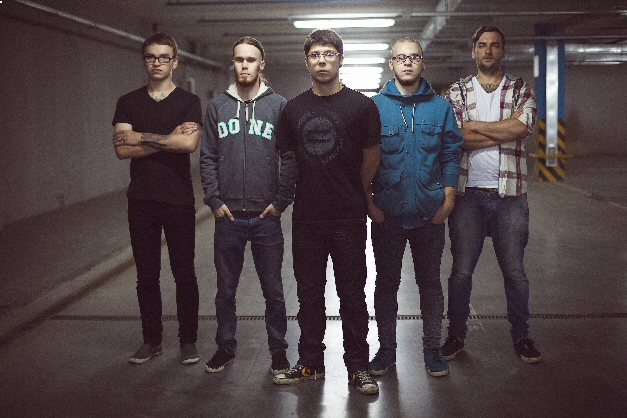
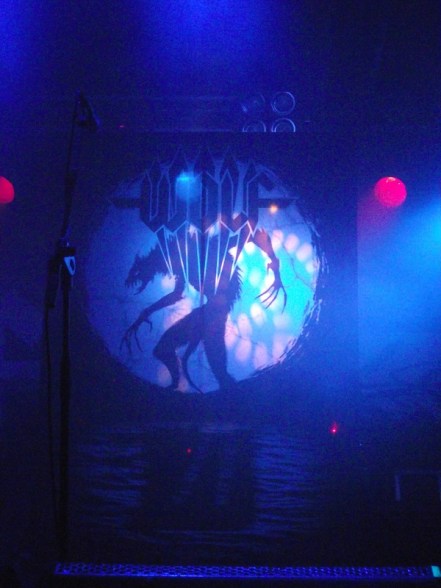
It is a year since we last saw WOLF in the UK and this month they are back to shake our eardrums with their Swedish heavy metal, supporting EVILE.
Blackdiamond from METAL SHOCK FINLAND caught up with Viper, Raptor, Tornado and Demon (A.K.A. Niklas, Richard, Anders and Simon) at The Corporation in Sheffield this week and conducted an interview with three of the four “Wolves.”
The show was extremely heavy, extremely loud with excellent metal tunes which left my ears ringing well into the following day!
Read below for some excerpts from our conversation:
Simon discussing WOLF‘s plans for next year said: “The main focus will be to sit down and work on the new album. We’re also playing Prog Power USA anda festival in Spain, but our main goal is to make the album, then a big tour afterwards.”
When asked about the forthcoming show in India, Simon Johansson and Anders Modd said the following: “We don’t really know what to expect. It could be good or it could be excellent (laughs). It’s arranged by Harley Davidson and Rolling Stone Magazine India. We have high expectations and we’re also looking forward to eating some curry and drinking some Indian beer.”
When discussing the impact of illegal downloads Richard Holmgren stated “It can affect us in a good and bad way. The bad way is of course it’s bad for business and people don’t get paid for what they put in. The good way, maybe 1000 people a week could get to hear WOLF through downloading, then they buy a ticket and come to the shows and also buy merchandise. You have to see it in the long term, the bands will get something back from it eventually.”
I was also told some exciting news about a new product from WOLF in the shape of a hot sauce, going by the awesome name of WOLF’S BLOOD! It is being produced in Austria and the band are looking right now at the best way of delivering it to the fans. The guys said “We are working on some fun stuff that we can’t talk about yet, but we do have a hot sauce coming out called WOLF’S BLOOD. It’s 666 thousand Scoville strength and it makes you howl, don’t drink it!!”
Listen to the interview in full below:
Check out the following video footage filmed by Blackdiamond at the show:
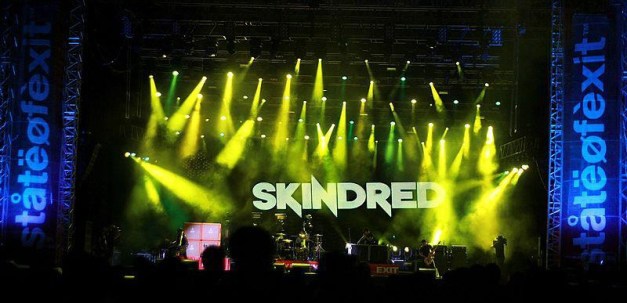
London-based SKINDRED is totally unique and remain without peer in music today. The quintessentially British band is the only one to have combined elements of punk, rock, metal, reggae and electronic music with such success. 2012 has so far seen Skindred headline a Sold out Brixton academy show (5000 capacity) and at Download Festival and a number of other key festivals globally, the future looks red hot for Britains most exciting Live act. Recently Metalshock Finland‘s Tarja Virmakari had a chance to interview Dan Pugsley (bass), please join the conversation…
1. Hi Dan, I’m Tarja, welcome to Metalshock Finland! we had to do this interview at Myötätuulirock in Finland (in august), but only a couple of days before you had to cancel your show… what happened?
Hi Tarja! We were set to play a festival the day before in Czech called Sazavafest and sadly they cancelled us which left us unable to book flights from direct from the UK without it costing either Myötätuulirock or us to much money as flight costs had risen considerably. Sadly sometimes things happen that are beyond our control and we truly wanted to rock the festival and were really looking forwards to it.
2. Your genre can be considered quite unique, you yourself call it “Ragga Punk Metal”, it’s a mix of heavy metal, punk and reggae, with elements of dancehall, jungle, hardcore, ska, hip hop and what else… but how did you find it?
We see what we do as a decedent of the artist’s like the Clash and the Specials personally bands like the beastie boys and Massive attack growing up meant i was exposed to samples of reggae punk jazz and all manner of musical genres that would have other wise passed this metal kid by.
In 2005, West Virginia, Nechochwen were born. Introducing passionate explorations of Native American Indian heritage through stunning classical guitar instrumentations and atmospheres, combining obscure intros in extreme metal, folk metal and melodic metal; I caught up with Nechochwen following the release of the Oto LP.
Dylan: How long have you been together as a band and how many other releases do you have available?
Nechochwen: I started writing music for Nechochwen around 2005, and back then I was just concerned with making dark acoustic music based on local Native history. It wasn’t a band at all really, just a collection of my acoustic, classical, and traditional music that gave a loose narrative of events, emotions, tragic events, etc. that occurred in the woodlands of North America in the Eighteenth Century. This was the Algonkian Mythos cd release on Dark Horizon Records. The research of this subject hit close to home as I found connections in several branches of my own family to some of the events I was writing about. At that time Pohonasin only had a production and support role. After the first album we contributed a track to a two-disc compilation called Der Wanderer uber dem Nebelmeer. The track was called ‘Winter Strife’ and was quite a departure from the début. I really felt the song needed distortion, bass, and drums in the latter half. So that’s how Pohonasin came to be drummer and bass player for Nechochwen. Soon after, we got to work on the second album; a loose concept piece based on the Mound Builders of the Ohio Valley called Azimuths To The Otherworld. Hopefully our third release (first on LP), Oto, will be available by the time your readers see this. It is intended as a limited double EP; Side A is acoustic, Side B is metal. This album focuses on ancient tradition in modern times and the importance of giving thanks and respect to your ancestors.
Dylan: Talk to me about the concept behind this album, how was the foundations set for everything that happens in part A of the album?
Nechochwen: Over the past two and a half years I’ve reconnected with some old friends of the same ancestry and made some new friends as well. I learned about lots of things that had always been mysterious to me. Woodland music for example! I learned a lot about music of the Shawnee, Lenape, Kickapoo, Cherokee and more. Ancient crops as well, like certain kinds of corn, squash, and tobacco. Maybe the thing that fascinates me the most is language. Communication, even the smallest conversation, in a language spoken by your ancestors is profound. I feel strongly about preserving these languages and songs. Writing lyrics for Oto was a great exercise for me in learning the Shawnee language. It certainly was a challenge. The intro track, ‘Cultivation’, is an homage to perpetuating all of these things in an unlikely time, the 21st Century! Perhaps these traditions can flourish in modern times like they did long ago. ‘On the Wind’ and ‘Otomen’pe’ remind us of this importance and that the best guides for the living are spirits. ‘Haniipi-Miiši’ honours a tree that is sacred to me, a local elm that is nearly 400 years old.
Dylan: In the track “Elm Tree” I hear so many influences coming from Classical traditions all the way to Native Indians whilst maintaining the folk metal foundations. Where would you say your main influences lay?
Nechochwen: This was played on a Paax Muul classical, but I think my influences were more acoustic folk or something here. To be honest, I’m not sure; I just thought it was a nice series of riffs that felt good as a tribute for a great tree. There might be some influence from Nick Drake or from Iron & Wine. Maybe some Andrew York or Steve Morse influence too. The slow rhythm part at the end uses this weird “every other string” pluck thing I’ve been doing since about 2003. I use it a lot, but I have no clue why i started doing it. Usually I use it with alternate tunings, but it served me well here, the song is in standard tuning with a capo on the 2nd fret. The vocal part at the end uses traditional syllables and was sung in tribute as well. The vocal influences when I sing like this are artists like David Gilmour, Jonas Renkse, and Dan Swano to some extent. In no way do I claim to be of the same calibre, but they are influences.
Dylan: How would you say this LP differs from your previous works in terms of musical attention and spiritual awakening like in the track “He Ya Ho Na“?
Nechochwen: I felt a greater connection to the subject matter than ever before, so I think that was the main difference. The first half of the song was a bit more calculated, like previous material, but the second half was a riff that was largely improvised, like a flute melody. The way I think about writing music changed a bit last year. I’ve been shutting off my brain and just letting music come out. So I think there was actually less musical attention, more emotion and instinct. It’s more rewarding in some ways but out of my comfort zone because I’ve studied and written so much structured music. I think this was the first album that had my own feelings and views in the lyrics, not just a narrative of events, people, or traditions. In this way, maybe the music is a bit more abstract and personal.
Dylan: Having not had the opportunity to experience your live shows can you tell me what you bring to the live stage in terms of atmosphere and experimentation?
Nechochwen: We haven’t been doing live shows. Occasionally I do classical guitar recitals, and I always throw in some Nechochwen pieces, but Nechochwen is a studio entity for now. Our focus is on making albums with atmosphere and experimentation, and we have only played a few songs live at local events.
Dylan: Listening to the tracks “He Ya Ho Na” and “On the wind” with the very Opeth feel and expressions making the listener feel as though they’re there with you. Was this a deliberate set-up for this type of feel or were you trying for something else?
Nechochwen: I hadn’t thought of it this way! Again I was interjecting my thoughts and feelings because the album focuses on ancient tradition in modern times. This is the only era I’ve written about that I’ve actually experienced first-hand. No matter how much knowledge you have of the ancient or historic past, I can’t comment on what it would have felt like to live in those times. I can only speculate. Ironically, the earlier albums seemed easier to make in some ways! For me it’s easier to make lyrics and atmospheres about the past; I just imagine I’m there and I can get creative with it. It’s much more difficult for me to try to be eloquent with my own feelings about my life and how I choose to live it. I didn’t set out to do that initially, but I think that I needed to do it for myself. Maybe if the listener feels some of the same things I’ve written about in the songs, they’ll feel involved in the music as you’ve described.
Dylan: Talk to me about the track “Our Ancestors“. The lyrics are deeply outstanding and delicate. Was there a particular line of thinking behind this song? The finger picking guitar us beautifully played here, can you say who the main influence for writing like this is?
Nechochwen: The lyrics are just some realizations I had made while giving thanks. Some of the most basic, simple acts in life are some of the most important; when you acknowledge those who came before you, I believe you are acknowledged in return. “Otomen’pe” is about incorporating ancient ways of living your life into modern times and in turn nourishing and sustaining those close to you in our dysfunctional society. Thanks for the great compliment on the guitar work! The beginning reminds me, in hindsight, of the classical guitar piece “Romanza” that most students learn at some point. I threw in some grace notes that were used in pieces by Sor, Guiliani, and other composers of the Nineteenth Century. So it was influenced by the old guitar masters that are such a joy to study. The middle section has almost a Celtic feel to it. Maybe the melting pot of German, Scotch-Irish, and American Indian music that I simply think of as Appalachian is at work here. The end section sounds flamenco, but my intent is purely American! I wanted a big build-up there, so rasgueado strums with a lalawas (rattle) were what I chose to use. I learned these strums not from Spanish flamenco dances but from studying the tango music of the Argentinian composer Astor Piazzola. His guitarist, Baltazar Benitez, used some amazing right hand strums that I’d think would be of Spanish origin. The way that they’re used gives the music more of a Western Hemisphere vibe though (to me anyway), so I wanted to incorporate them. They are also used in the second half of Cultivation.
Dylan: On your final track I hear combinations of black metal, folk, folk metal and Classical. How many more are there?
Nechochwen: I think you nailed it! The end section is more in line with acoustic finger-style music. It’s the same musical theme as the layered heavy part right before it. I really liked the theme but I didn’t want to keep doing the same thing over and over in the song. I thought this finger-style approach would provide a contrast while continuing a similar melody.
Dylan: How many people are in the outfit?
Nechochwen: There is just me and Pohonasin, and for now we are a studio entity except for some acoustic pieces I play when I do solo guitar recitals/concerts.
Dylan: Do you have any tours/gigs coming up?
Nechochwen: No, we don’t have any plans for that. I’ll be doing a few solo classical guitar performances locally but no plans to tour.
Dylan: Talk to me about instruments, I hear loads but there are some obscure ones in there too. Can you tell me what they are and why you chose these particular instruments?
Nechochwen: I played a Cedar flute on Side A for a couple songs, and the lalawas I mentioned before; it’s a fine rattle I made from deer rawhide. These are traditional instruments that can still be used in modern music. For the acoustic guitar material I used the Yairi steel-string that was used on all the other recordings (my favourite guitar tone comes from the vintage type, 12-fret folk style), but I used a Paax Muul Classical instead of the Yairi classical this time for its punchy spruce top and that funky elevated Humphreystyle neck it has. I was told the guitar practically mixed itself in the tracking process. For Side B, I once again played the LTD Eclipse for rhythms and leads but we tried some different amps than on Azimuths – we wanted to experiment a bit with different tones. I can’t get by without my Ebow; it gives those sounds that are more like a wooden flute and less like those used in an orchestra. Those sounds at the end of Cultivation: that is the sound of wood being prepared in the construction of structures and flint being knapped for tools and projectile points. In the background is a man singing a melody to the beat of a hand drum. I think it’s one I made from deerhide stretched over a hollowed-out gourd. I thought this was a good way to represent the sounds of a village being ‘cultivated’ out of material provided by the earth.
Dylan: Can you give us some links to videos, music, pages etc…?
The italian hardrock band BIGROUGH is a brainchild of Alex Cole, guitarist, composer and singer, who has a significant and long musical journey. After several months of disperate searching for the right partners in crime, in Mid-December 2010 Alex finally finds the right musicians to realize his project. In 2011 the band released an 5 song- EP “Hang on Tight!”. Metalshock Finland‘s Kostya Aronberg had a change to interview Alex Cole, the band’s lead vocalist and guitarist, please join the conversation…
1. Hey Alex! I’m Kostya, Welcome to Metal Shock Finland!
Hey Kostya ! First of all nice to meet you, it’s a great honour to be here. A Big hello to MSF fans !!!
2. At first, lets start with “How are you” and “What are you doing right now?”
I’m really good thankyou, i just got back from rehearsals and i’m so excited, another good riff for a new song has come. I’m very underpressured but in the positive way because i’m workin to the new stuff with my band. We are creating a lot and we can’t wait recording.
LOST IN ALASKA was formed in November 2007 in Chelyabinsk city, Russia. The band’s style was formed by severity of Russian winters and metallurgy factories. The new EP “Time Of Solution” was released only a couple of days ago. Recently Metal Shock Finland‘s Kostya Aronberg had a chat with the band’s guitarist, Maxim Zadorin, please join the conversation.
1. Hello Maxim and welcome to Metal Shock Finland! How are you?
Hello Metal Shock Finland! I am glad to give you some answers.
2. The “Lost in Alaska” was formed in 2008, and since then it has became a very popular death-core band in Russia. Can you tell us more about how the band was formed, and why you chose death-core as your style?
We went through a lot during this time, many argued and still there are differences, but it is normal. All true, band was formed in 2008 by two friends Alexey Kurochkin and Vladimir Kaznacheevskiy. They really wanted to play metal music. First lineup was formed very fast and guys after a month of rehearsals have played some gigs in his home town. Really wanted to play something heavy and rocking at the same time, but some shit comes out. One fine day in the internet space they saw video of Despised Icon and they were blown away by that power which dumped on the audience. At the same time, they have become big fans of this genre!
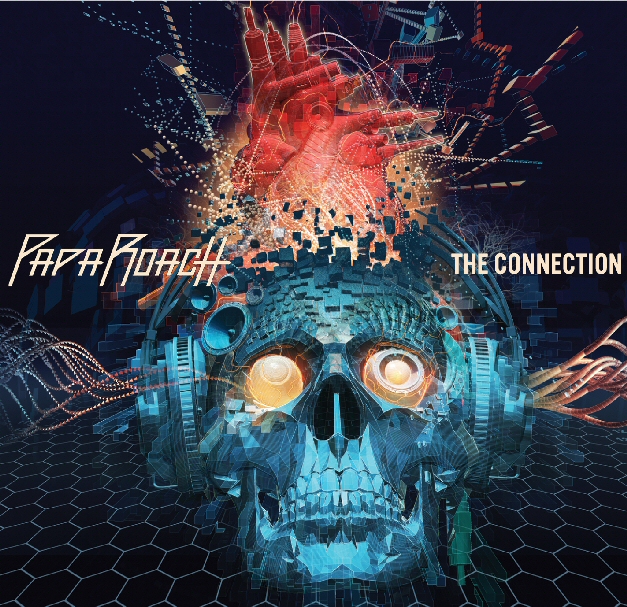
PAPA ROACH is not like your everyday rock band, they certainly are a breed apart with their intense and personal punk-rock-rap sound defined by Jacoby Shaddix’ powerful vocals. With their upcoming album “The Connection”, due out on September 28th through Eleven Seven Music / EMI, they prove once again that they are still killin’ it and they are still swingin’ after all these years!
Photo by Travis Shinn
Some days ago Metalshock Finland‘s Tarja Virmakari had a chance to interview PAPA ROACH‘s lead guitarist Jerry Horton. In 20 minutes were mainly talked about their new album “The Connection”. Jerry told about the new sound and elements on it… talking about the new video “Still Swingin” he told that it was Jacoby’s 7 year old son who gave the idea for the zombies! If you wanna know more, please join the conversation here below.
Art by Android Jones
Still Swingin’
THE ROCK ALCHEMIST – Italian Rock Band from Turin with a strong sonic identity that blends modern rock with progressive, hard, alternative, and pop elements!
Kimmo Kuusniemi’s SARCOFAGUS return with a Historic 2010 Concert Video Premiere on YouTube! Click image to watch the video



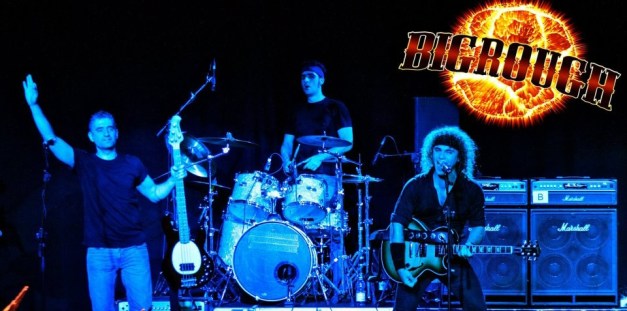 The italian hardrock band BIGROUGH is a brainchild of Alex Cole, guitarist, composer and singer, who has a significant and long musical journey. After several months of disperate searching for the right partners in crime, in Mid-December 2010 Alex finally finds the right musicians to realize his project. In 2011 the band released an 5 song- EP “Hang on Tight!”. Metalshock Finland‘s Kostya Aronberg had a change to interview Alex Cole, the band’s lead vocalist and guitarist, please join the conversation…