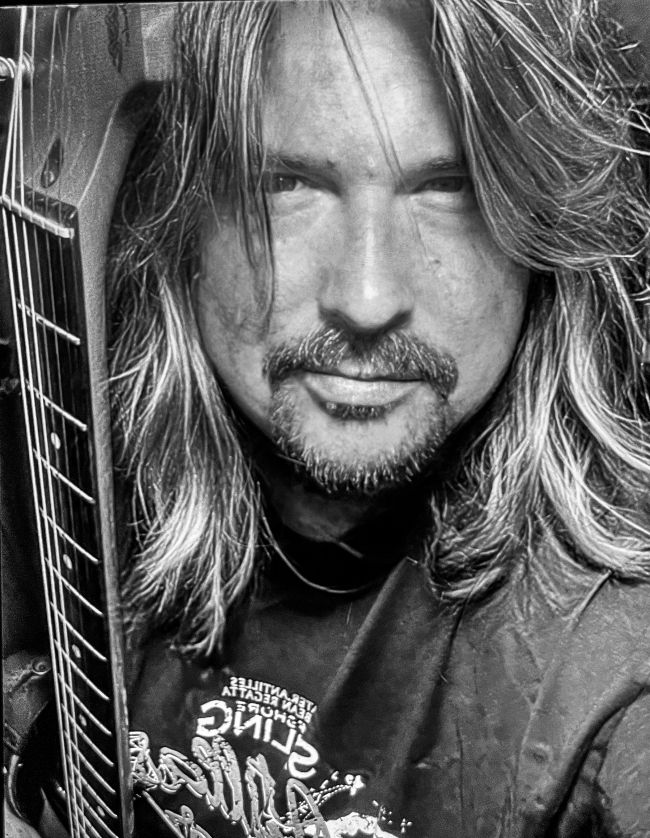
Some albums are planned. Some are demanded — by grief, by love, by the kind of loss that leaves a silence so wide you have no choice but to fill it with the only thing you know.
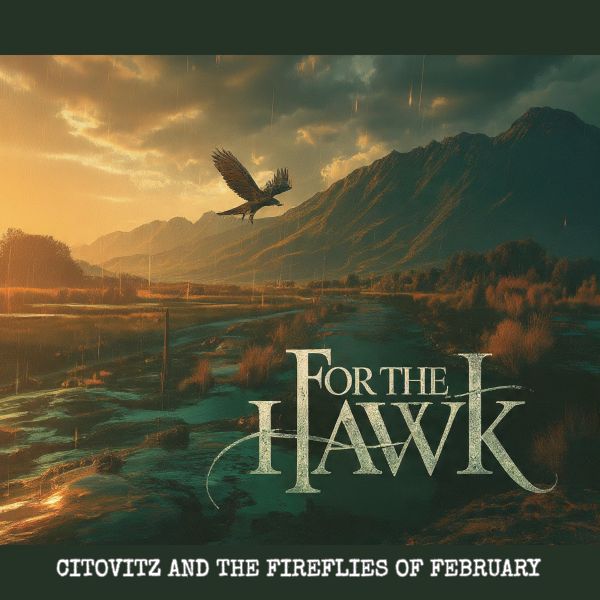
“For The Hawk” is the new release from Citovitz and The Fireflies of February — the recording project of Polish-born guitarist, composer, and songwriter Andrzej Citowicz, based in Cairo, Egypt. It is available now on all major streaming platforms worldwide. And it arrives on a date that was never truly a coincidence. The official lyric video for ‘I Don’t Have To Hide’ — released also today with the album premiere, May 4th — is available now on YouTube:
May 4th. Star Wars Day. The day the world celebrates the Light Side of the Force.
He was always Light Side. Not once. Not ever, did he choose anything else.
THE HAWK His name is not printed here. Those who knew him need no introduction. Those who didn’t will understand everything they need to know from the music itself.
He was a friend. A mentor. A father figure to both Andrzej and his wife Shereen Shoukry Citowicz. He stood quietly in the background for years — never asking for recognition, never needing applause — and made everything around him better simply by being present. He was the kind of person who would die for the people he loved without hesitation, and never once mention it afterward. The kind of person the world produces rarely and loses too soon.
He was also a devoted Star Wars fan. A Light Side soul in every sense of that phrase — not as metaphor, but as lived practice. He chose good not because it was easy or rewarded or noticed, but because that was simply who he was.
“He stood in the background so we could stand at all. He never asked for anything. He gave everything. Love was not something he spoke about — it was something he did. Every single day.” — Andrzej Citowicz
When he was gone, Andrzej and Shereen faced what so many have faced before them — the impossible task of responding to an absence that language cannot adequately address. They did what they have always done. They turned to music.
A BLESSING, A CURSE, AND THE WEIGHT OF FRIENDSHIP For The Hawk did not begin as an album. It began as a song — Love Is All We Need — written in the spirit of Bon Jovi, warm and wide open and completely unapologetic in its belief that love is the hardest, strongest, most load-bearing thing a human being can carry. Shereen wrote the lyrics as a tribute. As his message, returned to the world in the only form she and Andrzej knew how to give it.
Then the grief kept arriving. And the songs kept coming with it.
This Is One’s For the Hawk. We Are The Good Guys. I Don’t Have To Hide. Love Is All We Need. Each track arrived from the same source — the specific, irreplaceable ache of losing someone who shaped you. Someone whose guidance you did not fully appreciate until the guidance was no longer there. Someone whose friendship was so present, so reliable, so quietly foundational, that you only began to understand its full weight when it was no longer something you could reach for.
“Music is all I can give back. If there is any paying back for his love, his friendship, his heart held out for both of us — for me and for Shereen — then this is it. Every note. Every lyric. Every song on this record.” — Andrzej Citowicz
“For The Hawk” is not a grief project. It is a friendship project. It is a record about the people who stand in the background and hold everything together — unseen, unrewarded, irreplaceable. About the loyalty that does not announce itself. About the loss that does not diminish but deepens everything it touches.
Andrzej and Shereen have faced much in recent years. Loss upon loss. The kind of accumulation that would silence many artists. Instead, it has done the opposite — driving both of them deeper into the work, further into the honesty that has always defined Citovitz and The Fireflies of February at their best.
MAY THE 4TH BE WITH HIM The choice of May 4th as the release date arrived with the particular logic of things that feel inevitable in retrospect. Star Wars Day. The day the galaxy celebrates the Light Side. The Jedi. The ones who chose good because it was right, not because it was easy — who stood in the fire and did not become it.
He was exactly that.
“I told myself it was coincidence. I know now that it was not. He was always Light Side. This was always his day.” — Andrzej Citowicz
On the day of the album’s premiere, a special official lyrics video was released for I Don’t Have To Hide — one of the most intimate tracks on the record. A song about the freedom that comes from being fully known and fully accepted by another person. The kind of freedom H gave to everyone around him, simply by being who he was.
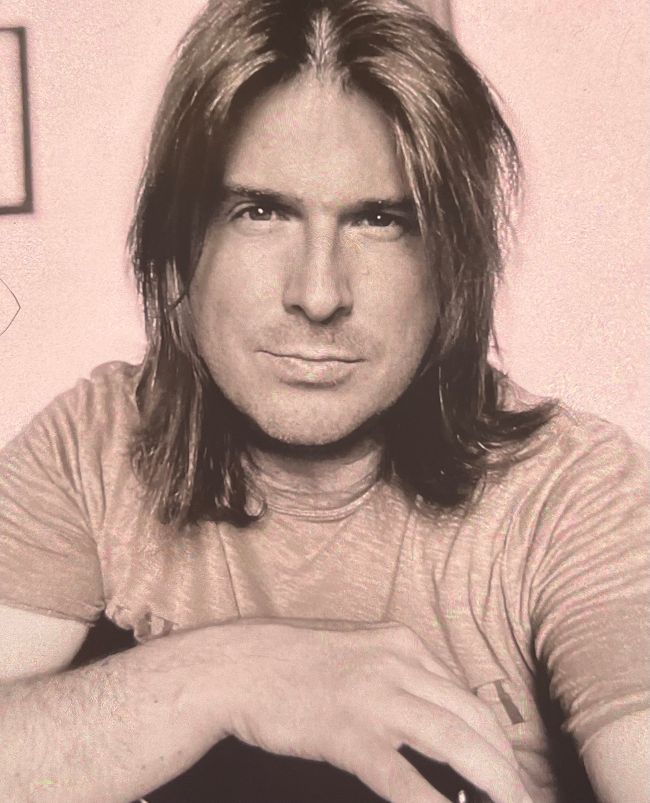
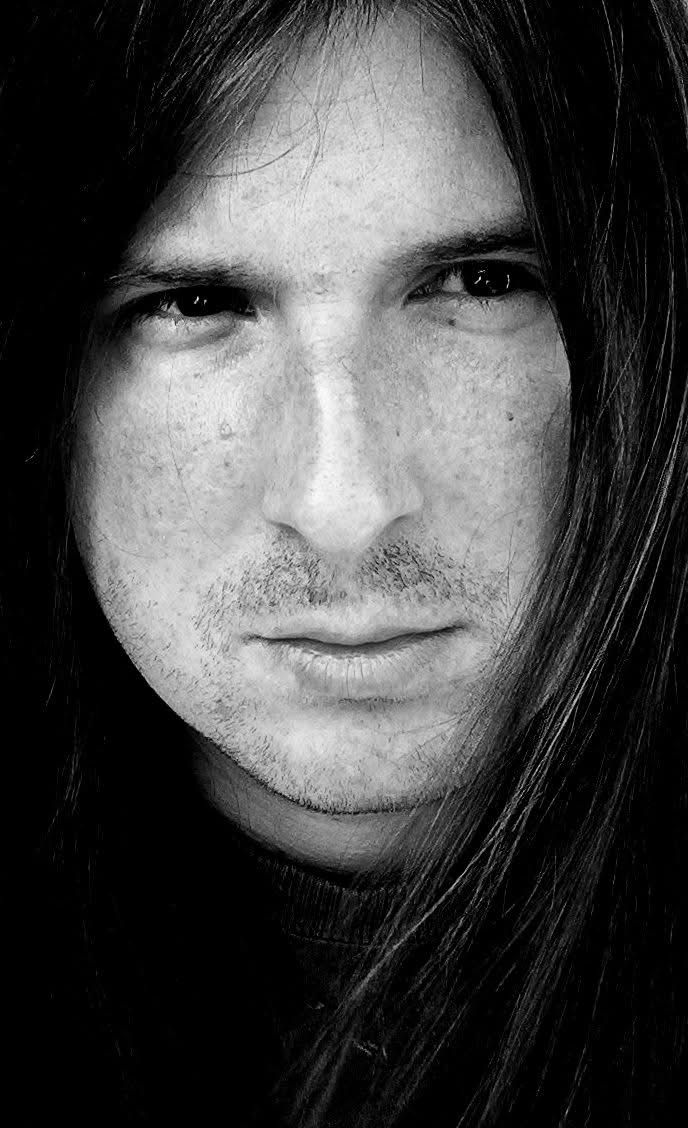
THE MUSIC: CITOWICZ WITH GUITAR IN HAND Musically, For The Hawk is unmistakably Andrzej Citowicz. The guitar is first. It is always first. Modern technology surrounds it — the home studio in Cairo, the production, the arrangements — but the heart of every track beats with the same pulse it always has: a guitarist who grew up in Wałbrzych, Poland, absorbing Bon Jovi, Def Leppard, Desmond Child, and the great power ballad tradition of the late 1980s and early 1990s as if his life depended on it.
Because in some ways, it did.
That DNA runs through every track on this album — the melodic hooks, the emotional guitar work, the cinematic arrangements that make vulnerability feel enormous rather than small. Phil Collen’s harmonized leads. The Bon Jovi warmth that turns a love song into a declaration. The Def Leppard wall of sound that makes a chorus feel like the world opening up.
But For The Hawk is not nostalgia. It is a man with a guitar and fifty years of scars, writing songs for someone who mattered, in the only musical language that has ever felt completely honest to him.
“The guitar is always first. Modern technology helps me build what I hear. But what I hear — I have been hearing since the early 90s. That has never changed. And with this album, more than any before it, I did not want it to change.” — Andrzej Citowicz
SHEREEN: THE LYRICAL SOUL Shereen Shoukry Citowicz is not a supporting presence on this record. She is one of its two central voices. Her lyrics — on Love Is All We Need and throughout the album’s emotional architecture — carry the particular honesty of someone who has processed grief not as a subject but as a lived experience, and found a way to transform it into something that reaches far beyond the personal.
After nearly 18 years of marriage, Andrzej and Shereen have built a creative partnership that continues to deepen and surprise. She gives him words he could not find alone. He gives her music that carries those words further than either of them could go separately. For The Hawk is their most unified and most personal collaboration to date.
“Without her — there would be nothing. Not the music. Not the courage to finish it. Not the reason to begin again every time the silence got too heavy. She is not just the person I come home to. She is the reason the guitar sounds the way it does.” — Andrzej Citowicz
AVAILABLE NOW For The Hawk is available now on all major streaming platforms worldwide. The official lyric video for ‘I Don’t Have To Hide’ — released on the day of the album premiere, May 4th, 2026 — is available now on YouTube. Youtube link: https://youtu.be/id41xCN6u8Y?si=KxZJTsx1GD8yoU6l
This is independent music in the truest sense. No label. No industry machine. Just a home studio in Cairo, a guitar, a marriage built partly on music, and the memory of a man who deserved to be honoured in the only way Andrzej and Shereen know how.
“May the Force be with him. It always was. Light Side. Forever.” — Andrzej Citowicz
TRACK CREDITS Music & Guitars: Andrzej Citowicz Lyrics: Andrzej Citowicz / Shereen Shoukry Citowicz Recorded & Arranged: 2026 Premiere Lyrics Video: I Don’t Have To Hide — May 4th, 2026 Artist: Citovitz and The Fireflies of February Dedicated to: H — Light Side. Forever. 🦅
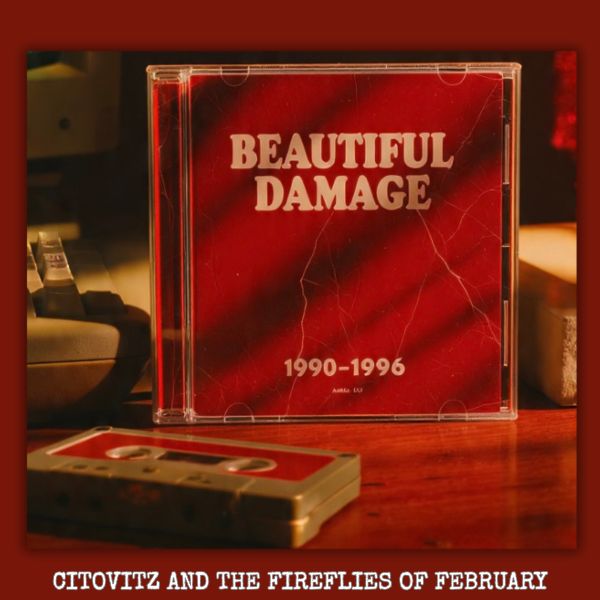
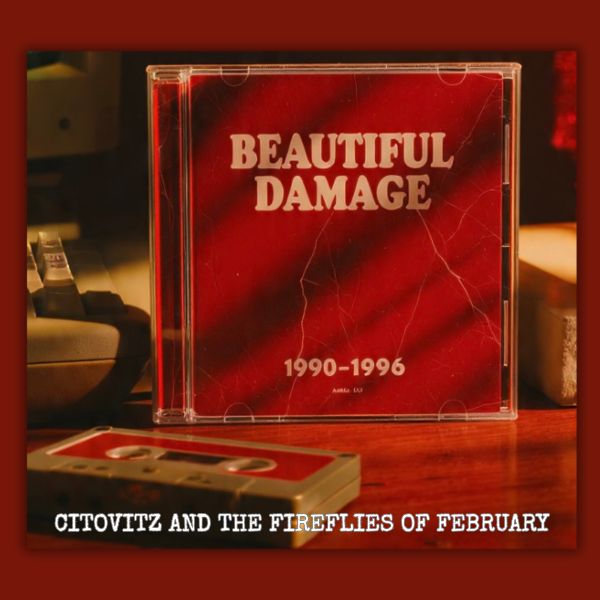
CITOVITZ AND THE FIREFLIES OF FEBRUARY — the recording project of Polish-born guitarist, composer, and songwriter ANDRZEJ CITOWICZ, based in Cairo, Egypt — announce the release of Beautiful Damage: 1990–1996, a deeply personal full-length album built from original songs written between the ages of 14 and 20, discovered on two old tape cassettes, and completed three decades later in a home studio.
The album arrives in April 2026 (released yesterday on April 13th) — the same year Andrzej turns 50 — and stands as one of the most honest and emotionally complete works of his recording career.
THE CASSETTES THAT SURVIVED The story begins not in a studio but in the quiet shock of rediscovery. Two tape cassettes surfaced — the earliest musical archive Andrzej ever created. Recorded on an old acoustic guitar in Wałbrzych, Poland, between 1990 and 1996, the demos were raw and unfinished. Some had lyrics. Others were just chord progressions, melodies without words — ideas a teenage boy could hear in his head but was not yet equipped to complete.
They were put away. Life filled the space between then and now. Love, loss, marriage, grief, survival, and the long slow work of understanding who you are. And when those cassettes were finally played again, Andrzej heard not relics — but blueprints. Songs that had always known what they wanted to be. They had simply been waiting for the life that would finish them.
“This is the next chapter of my music journey. I found old tape cassettes. Two of them. My first songs from 1990 to 1996. Some with lyrics. Some without. Just ideas a kid couldn’t finish yet. I wasn’t ready then. I am now.”
BON JOVI, DEF LEPPARD, AND THE SOUND OF A GENERATION To understand Beautiful Damage: 1990–1996, you need to understand what was playing when these songs were first written. Bon Jovi’s New Jersey era. Def Leppard’s Hysteria and Adrenalize. Richie Sambora’s guitar work. Desmond Child’s songwriting architecture. The Europe of Out of This World. Whitesnake. Winger. These were not influences — they were the air Andrzej breathed as a teenager discovering what music could do to the human chest.
That DNA runs through every track on this album — the melodic power ballad structures, the emotional guitar hooks, the stacked harmonies and cinematic arrangements. But Beautiful Damage: 1990–1996 is not nostalgia. It is a conversation between a boy who absorbed those sounds in the early 1990s and a man who has spent thirty years learning what to do with them.
“Bon Jovi’s Always premiered in late 1994. I was 18. I sat down with my guitar and recorded chords that same week — just the feeling.
The Def Leppard influence runs equally deep — not just in the guitar tones and production choices, but in the philosophical approach to the power ballad as a vehicle for emotional truth. Phil Collen and Steve Clark’s harmonized guitar work, the wall-of-sound production of Mutt Lange, the way Hysteria made vulnerability feel enormous — these are the standards Andrzej measured himself against as a teenager and continues to reach toward today.
THE TITLE TRACK: WHERE THE ALBUM FINDS ITS NAME Beautiful Damage — the title track — is the song that gives the entire project its emotional compass. Written in the early 1990s and completed in 2026, it speaks of lost youth not with bitterness but with the strange, hard-earned gratitude of someone who survived long enough to understand what those years were actually worth.
On this track alone, Andrzej is joined by his longtime creative partner and bassist Patryk Szymański — a collaborator of more than a decade, and in every meaningful sense, a brother. Patryk’s bass work on the title song does not simply anchor the rhythm. It speaks its own truth through the arrangement, responding to and deepening the emotional content of the track in the way that only years of musical trust can produce.
“Sometimes you need 50 years of scars to finish what you started at 14 — and left behind in your twenties. I wasn’t ready to write these words then. I needed everything that happened in between to understand what this song was always about.”
“Patryk’s bass on Beautiful Damage says things I didn’t even know the song needed said. That is what happens when you make music with someone you truly trust. They hear what you can’t yet hear yourself.”
Watch Beautiful Damage lyric video here:
A SONG FOR ESTHER: SHEREEN’S GIFT Among the songs on Beautiful Damage: 1990–1994, one stands apart in origin and meaning. A Song For Esther was written for a very special person — and it was Shereen Shoukry Citowicz, Andrzej’s wife of nearly 18 years, who added her touch, her heart, and her voice to bring it fully to life.
Shereen has become one of the most significant creative forces in Andrzej’s musical world. She is not a background presence. She is a full collaborator — her lyrical voice, her emotional instincts, and her willingness to place the most honest parts of herself inside a song have shaped some of the most powerful work Citovitz and The Fireflies of February has ever released.
On A Song For Esther, her contribution is both personal and profound. The song exists because of a person who mattered. Shereen made sure the music was worthy of that person.
“Shereen gave this song what I could not give it alone. She understood who it was for and what it needed to say. Her voice, her heart — they are woven into every note of it. I am grateful every day that she walks this musical journey with me.”
THE SONGS AND THEIR MEANING Beautiful Damage: 1990–1996 is a collection that moves across thirty years of unfinished business. A Song For Esther carries the quiet, irreplaceable weight of a song written for someone specific and made complete by love.
Every song on this album was written during the years when music is absorbed most completely — the teenage years, the early twenties, the period when the heart is fully open and the vocabulary to describe what it feels has not yet arrived. That vocabulary exists now. The album is the proof.
“These are not old songs given a new coat of paint. They are finally what they always wanted to be. The demos were the bones. 2026 gave them everything else.”
THE PHILOSOPHY OF COMPLETION Beautiful Damage: 1990–1996 arrives in the same year as Andrzej’s 50th birthday — the same year he released the My Revenge EP as a declaration of survival. Where that EP looked across fifty years of living, this album reaches back to the very beginning — to the bedroom in Wałbrzych, the acoustic guitar, the cassette player, the boy who felt everything and wrote it down before he understood what he was writing.
Completing these songs was not an act of nostalgia. It was an act of responsibility. To the boy who recorded them. To the music that survived. To the life that made finishing them possible.
“The world is too crazy to wait with dreams. Time to finish them.”
Andrzej Citowicz operates entirely independently — no label, no mainstream industry support, no compromise. His home studio in Cairo is where every note of this album was shaped and recorded. The living room rockstar, as he has called himself — building something real and permanent from the most personal materials available: memory, survival, love, and the guitar his late father Arkadiusz hand-built an amplifier for, all those years ago in Poland.
TRACK CREDITS Music & Guitars: Andrzej Citowicz Bass on ‘Beautiful Damage’: Patryk Szymański Vocals & Heart on ‘A Song For Esther’: Shereen Shoukry Citowicz Lyrics: Andrzej Citowicz / Shereen Shoukry Citowicz (where credited) Originally Recorded: 1990–1996 (acoustic and early electric guitar demos on tape cassette) Completed & Arranged: 2026 Artist: Citovitz and The Fireflies of February
CITOVITZ AND FIREFLIES OF FEBRUARY have released the official lyric video for “Beautiful Damage” — the title track of the forthcoming album “Beautiful Damage: 1990–1994”, scheduled for release in April 2026.
The video marks the first official chapter of a deeply personal project: a collection of songs written between 1990 and 1996, rescued from old tape cassettes, and completed three decades later in a home studio in Cairo.
Watch the lyric video here:
THE CASSETTES THAT SURVIVED
The story of Beautiful Damage: 1990–1994 begins not in a recording studio, but in the discovery of two old tape cassettes — the earliest musical archive of Andrzej Citowicz, a Polish-born guitarist, composer, and songwriter now based in Egypt, recording under the name Citovitz and The Fireflies of February.
Those cassettes held the first songs Andrzej ever wrote. Recorded on an old acoustic guitar between 1990 and 1996, some tracks had lyrics. Others were just chords — ideas that a young boy in Wałbrzych, Poland could hear in his head but was not yet equipped to finish. They were put away. Life happened. Loss happened. And for thirty years, those songs waited.
“This is the next chapter of my music journey. I found old tape cassettes. Two of them. My first songs from 1990 to 1996. Some with lyrics. Some without. Just ideas a kid couldn’t finish yet. I wasn’t ready then. I am now.”
BEAUTIFUL DAMAGE: THE SONG THAT NAMES EVERYTHING
The title track carries the weight of the entire project in one piece. Written in the early 1990s and completed in 2026, “Beautiful Damage” is the song that gave the album its name — and its emotional compass. It speaks of lost youth not with bitterness but with the strange, hard-earned gratitude of someone who survived long enough to understand what those years were worth.
The damage was real. So was what it built.
“Sometimes you need 50 years of scars to finish what you started at 14 — and left behind in your twenties. I wasn’t ready to write these words then. I needed everything that happened in between to understand what these songs were actually about.”
Musically, the track draws from the classic rock and power ballad tradition that shaped Andrzej’s earliest instincts as a writer — influences rooted in Bon Jovi, Def Leppard, and Bryan Adams — while carrying the weight and production maturity of an artist who has spent decades refining his voice. The result is a song that sounds simultaneously like a memory and a reckoning.
COMPLETING THE UNFINISHED: A PHILOSOPHY OF RETURN
The album Beautiful Damage: 1990–1994 is not a nostalgia project. It is an act of completion. Using his home studio, modern recording technology, and the same beating heart that first pressed record on those cassettes, Andrzej has taken the strongest of those early ideas and given them the production, the arrangements, and the lyrics they always deserved.
Bassist and longtime creative partner Patryk Szymański — a collaborator of more than a decade — stands beside him again in this process, re-recording and rearranging the old demos into their final form. Theirs is a musical friendship built over years of work, trust, and a shared understanding of what music should cost to make honestly.
“Patryk has been with me through every album, every doubt, every late night when the music refused to come. On this one — perhaps more than any other — his presence means everything. These are songs I could not finish alone the first time. I am glad I don’t have to finish them alone now.”
THE WORLD IS TOO CRAZY TO WAIT
For Andrzej Citowicz, the decision to finally complete these songs was not merely artistic — it was urgent. Independent, self-managed, and uncompromising in his creative vision, he has spent his career building a body of work outside the mainstream music industry, on his own terms, at his own pace.
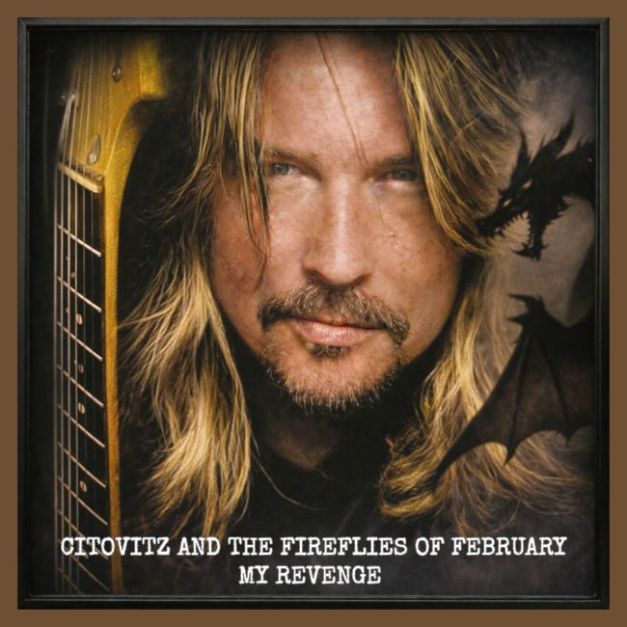
The My Revenge EP — released on his 50th birthday, February 10th, 2026 — was a declaration of survival. Beautiful Damage: 1990–1994 is its companion: not a look back in defeat, but a return with full understanding. Five songs for fifty years. Now — a full album for everything that came before.
“The world is too crazy to wait with dreams. Time to finish them.”
RELEASE DETAILS Lyrics Video: “Beautiful Damage” — available now on YouTube Album: Beautiful Damage: 1990–1994 — Coming April 2026 Originally Recorded: 1990–1996 (acoustic and early electric guitar demos on tape cassette) Completed & Arranged: 2026 Music & Guitars: Andrzej Citowicz Bass: Patryk Szymański Lyrics: Andrzej Citowicz Artist: Citovitz and The Fireflies of February
CITOVITZ AND FIREFLIES OF FEBRUARY have released the official lyric video for “The Demon Was Once an Angel” — the fifth and final track from the “My Revenge” EP, released on Andrzej Citowicz’s 50th birthday, February 10th, 2026. With this release, the EP’s lyric video cycle is complete: five songs documented, five chapters closed, five truths placed permanently on record.
THE PHILOSOPHY OF THE FALLEN
The song was written by Shereen Citowicz — the same lyricist behind “My Revenge”, the EP’s title track. Where that song burns with defiance, “The Demon Was Once an Angel” asks a harder, quieter question: not how did we survive, but what did surviving cost us? “Demons weren’t born demons. They were angels who fell. Good things that got broken. Innocent souls who learned the world doesn’t reward innocence. My wife Shereen wrote these words about transformation we never asked for. About how pain changes you into something different — not necessarily worse, just harder, less trusting, more guarded.”
The song’s central thesis — that the fallen were once innocent — carries enormous compassion within what could easily become a statement of despair. Shereen’s words refuse to judge the changed. They seek instead to remember what was there before the breaking. To acknowledge that the hardness people carry was once softness that the world refused to protect.
Watch the lyric video here:
MEMORY AS SALVATION
The lyric video presents the song’s most profound insight plainly: if you have become something harder, something more guarded, something the world might call a demon — you were likely an angel once. And that memory, however faint, is not defeat. It is a thread. It is what keeps a person from losing themselves entirely.
“If you’ve become a demon, maybe you were an angel once. And remembering where you came from — that’s what keeps you from being completely lost.” This is grief literature written as rock music. It is the kind of truth that doesn’t announce itself loudly but settles slowly — in the chest, in the memory, in the quiet moments when a person sits with what they have become and tries to find the version of themselves that existed before the damage.
Musically, “The Demon Was Once an Angel” draws from the tradition established by Winger and Kip Winger — technical without being cold, intricate without losing emotion. It is rock that thinks as it feels, that constructs carefully even as it speaks from an unguarded place.
Bassist Patryk Szymański — Andrzej’s collaborator of over a decade, a brother in every meaningful sense of the word — delivers bass work that does more than anchor the rhythm. It speaks. It carries its own narrative thread through the song, responding to and deepening the lyrical content rather than simply supporting it.
“Patryk’s bass doesn’t just support — it speaks its own truth. When you’ve been creating with someone for over ten years, there’s a musical intelligence that develops between you that can’t be faked. On this track especially, he understood exactly what these words needed.”
THE END OF MY REVENGE: FIVE SONGS FOR FIFTY YEARS
The “My Revenge” EP was conceived as a statement of survival — five tracks for fifty years of living, released as a 50th birthday declaration. Each song carries a different dimension of that survival: defiance, brotherhood, the theft of time, grief transformed into dignity, and now — the memory of innocence in the face of everything that has hardened.
The five tracks span two lyricists and one sustained emotional vision: Andrzej wrote “You’re Not My Friend — You’re My Brother, My Friend,” “Time Is a Thief,” and “I Am a Gentleman Tempered by Grief.” Shereen wrote “My Revenge” and “The Demon Was Once an Angel.” Together, they form a complete arc — not a tidy resolution, but an honest accounting.
“This is the final song from ‘My Revenge.’ Five songs for fifty years. Five pieces of survival turned into sound. Thank you for walking this journey with us. From the first song to this last one. You made my revenge complete.”
THE LYRIC VIDEO SERIES: WORDS MADE VISIBLE
The decision to document each track from “My Revenge” with its own lyric video reflects a consistent artistic philosophy: words this personal deserve to be seen, not just heard. Lyrics that emerge from lived experience — from grief, from loss, from the long work of remaining human — carry meaning that the ear alone cannot always hold. The lyric video format allows listeners to sit with the words, return to specific lines, and find themselves in the text. With this final release, that documentation is complete. Every word Shereen and Andrzej put into this EP now has a visual home. The record is permanent.
STREAM & WATCH
YouTube lyric video: https://www.youtube.com/watch?v=pPa5Fn9MQek The complete “My Revenge” EP is available on Spotify, Apple Music, Amazon Music, YouTube Music, and all major streaming platforms.
++++++
About Andrzej Citowicz: Andrzej Citowicz is an acclaimed Polish guitarist and songwriter currently based in Cairo, Egypt. As a former recording artist for DownBoys Records, he has built a reputation for emotionally resonant songwriting and distinctive guitar work. His music combines classic rock influences with contemporary production, creating a sound that bridges generational and cultural gaps while maintaining artistic authenticity. His YouTube channel has garnered over 70,000 views from an international audience.
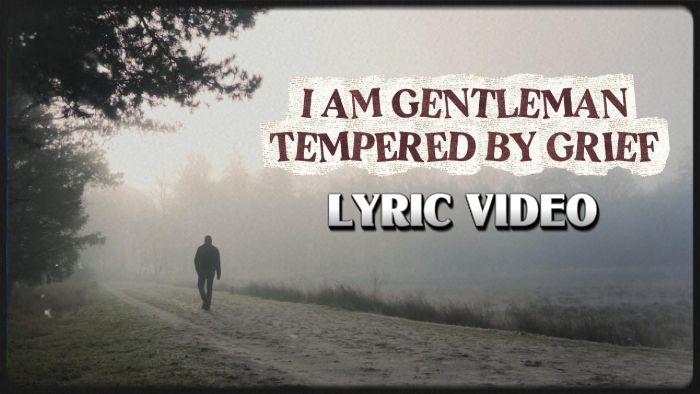
CITOVITZ AND FIREFLIES OF FEBRUARY have released the official lyric video for “I Am a Gentleman Tempered by Grief,” a deeply personal classic rock anthem from the “My Revenge” EP, released on Andrzej Citowicz’s 50th birthday, February 10th, 2026.
The lyric video, now available on YouTube (https://youtu.be/WrgAOinVu4M), presents the most introspective and vulnerable song from the five-track EP—a meditation on how profound loss transforms a person while preserving their essential humanity.
THE QUIETEST STATEMENT: GRIEF AS TRANSFORMATION
While “My Revenge” EP carries themes of defiance and survival throughout its runtime, “I Am a Gentleman Tempered by Grief” offers something different: quiet reflection on what remains after the fire, delivered through a classic rock anthem that balances power with vulnerability.
The song’s title encapsulates its entire philosophy—acknowledging both who Citowicz strives to be (a gentleman: kind, patient, understanding) and what shaped him (grief: loss, devastation, transformation he never chose). “After losing my son Jonasz, I’m not the same person,” Citowicz states plainly. “Grief changes you. It doesn’t make you bitter necessarily, but it makes you different. Harder in some ways. Softer in others. More patient with suffering. Less patient with bullshit. This song is about that transformation—about choosing kindness even after the world was cruel.”
The track carries particular weight as the only song on “My Revenge” where Citowicz explores internal transformation rather than external survival. It’s intimate, vulnerable, and remarkably honest about the ongoing nature of grief’s influence.
“I wanted to write about what grief does to someone who chooses to stay kind anyway,” he explains. “It’s easy to let pain turn you cruel. It’s harder—much harder—to be forged in fire you didn’t ask for and still preserve the good parts of who you are. That’s what ‘tempered’ means. Not destroyed. Shaped. Made stronger in unexpected ways.”
MUSICAL APPROACH: CLASSIC ROCK ANTHEM WITH SOUL
Musically, “I Am a Gentleman Tempered by Grief” represents a classic rock anthem in its purest form, drawing from the melodic sensibilities and emotional honesty that defined the genre’s greatest moments. “This track is pure classic rock,” Citowicz states with conviction. “There’s a touch of AC/DC’s melodic approach, Def Leppard’s way of building anthems that stay emotional without losing power, even The Darkness in how the guitars carry both vulnerability and strength simultaneously. This isn’t a ballad—it’s a classic rock anthem with soul.”
The guitars here employ the clean, melodic tones characteristic of classic rock’s most memorable tracks, creating hooks that serve the emotional content while maintaining the genre’s inherent power. The arrangement builds dynamically, creating space where needed but never sacrificing the forward momentum that defines an anthem.
“Def Leppard taught me that you can be emotional without being soft,” Citowicz reflects. “AC/DC showed that hard rock can hit… hard while staying accessible. The Darkness proved that classic rock isn’t dead—it just needs honesty. This song pulls from all of that. It’s an anthem, but it’s an anthem about something real.”
The production employs contemporary techniques while honoring classic rock traditions: warm guitar tones that recall the genre’s golden era, dynamic range that ebbs and flows with emotional content, and careful attention to how each element serves the song’s anthemic quality without overwhelming its intimate message.
“I wanted this to feel like classic rock—not retro, not nostalgic, but genuinely classic in approach,” he explains. “Big enough to be an anthem. Honest enough to be personal. Powerful enough to stand with the classics that influenced it.”
PATRYK SZYMAŃSKI: BASS AS MELODIC VOICE
Throughout “My Revenge” EP, bassist Patryk Szymański’s contribution has been crucial, but “I Am a Gentleman Tempered by Grief” showcases a different dimension of his musicianship—bass as melodic conversation partner rather than rhythmic foundation alone.
“Patryk’s bass work on this track is beautiful,” Citowicz emphasizes. “He’s not just holding down the rhythm—he’s playing melody. Listen to the verses. His bass line is as important as the vocal melody. That kind of playing only comes from deep musical understanding and genuine friendship.”
The bass lines throughout the track demonstrate the intuitive connection that develops from over a decade of musical collaboration. Szymański doesn’t simply support Citowicz’s guitar work—he engages in dialogue with it, creating harmonic depth that elevates the classic rock anthem structure.
“When you’ve been creating with someone for over ten years, you develop this almost telepathic connection,” Citowicz notes. “Patryk hears what I’m trying to say before I fully say it. On this anthem especially, his bass playing isn’t technical showmanship—it’s emotional intelligence translated into the language of classic rock.”
The result is bass work that feels organic, essential, and deeply connected to both the song’s thematic content and its classic rock foundation—much like how the genre’s greatest bassists understood that melody and rhythm could coexist in service of the song.
THE LYRIC VIDEO: MAKING WORDS VISIBLE
The decision to create a lyric video for “I Am a Gentleman Tempered by Grief” stems from the same philosophy that guided previous lyric videos from the “My Revenge” project: words this personal deserve to be seen, read, and absorbed beyond just hearing.
“These aren’t just lyrics—they’re a life map,” Citowicz explains. “Every line represents something real. Every word earned through actual transformation. I want people to read them, sit with them, recognize themselves in them. The lyric video format makes that possible.”
The visual presentation allows viewers to engage with the anthem’s message on multiple levels simultaneously—hearing the vocal delivery, reading the words, absorbing the musical support. For a classic rock anthem built on introspection and personal transformation, this multi-layered approach deepens connection while honoring the genre’s tradition of meaningful lyrics.
GRIEF, KINDNESS, AND THE CHOICE TO REMAIN HUMAN
At its core, “I Am a Gentleman Tempered by Grief” explores a question many survivors face: how do you maintain kindness, patience, and humanity after experiencing devastating loss? The classic rock anthem structure gives this personal question universal reach. The song doesn’t offer easy answers or false comfort. Instead, it acknowledges the ongoing nature of grief’s influence while asserting the possibility—and importance—of choosing kindness anyway, all delivered through the powerful, accessible language of classic rock.
“Grief taught me things I never wanted to learn,” Citowicz states. “It showed me who stays and who runs. It revealed what matters and what’s just noise. I’m a gentleman because I choose kindness even after the world was cruel. But I’m tempered—forged in fire I didn’t ask for. Both those things are true simultaneously.”
This dual acknowledgment—of damage and dignity, of change and continuity—gives the anthem its emotional power. It doesn’t pretend grief doesn’t alter you, but it refuses to accept that alteration must mean destruction. “You can be shaped by terrible things without being destroyed by them,” he continues. “You can carry loss without letting it make you cruel. You can be tempered—made stronger in the broken places—while still preserving what makes you human. That’s what this classic rock anthem is about. Big enough to be universal. Honest enough to be personal.”
FOR EVERYONE CHANGED BY LOSS
While deeply personal, “I Am a Gentleman Tempered by Grief” speaks to universal experience—the discovery that surviving profound loss requires ongoing choices about who you become afterward. The classic rock anthem structure makes this personal message accessible to anyone who’s faced similar transformation.
“This song is for everyone who survived something that changed them forever,” Citowicz offers. “For everyone who’s trying to stay kind after the world was cruel. For every gentleman and gentlewoman tempered by grief. If you’re fighting to preserve your humanity after it was tested by fire—this anthem’s for you.”
The message resonates particularly in an era where trauma, loss, and grief have touched countless lives in various forms—from personal bereavement to collective suffering. The classic rock format provides familiar musical language for unfamiliar emotional territory.
“We’re living in times when a lot of people are carrying loss they never expected to carry,” Citowicz observes. “This anthem doesn’t fix that. But maybe it reminds someone that transformation doesn’t have to mean destruction. That being changed doesn’t mean being broken beyond repair. That choosing kindness after cruelty is strength, not weakness. Classic rock has always been about those kinds of truths—big emotions, honest statements, music that connects.”
CONTINUING THE “MY REVENGE” NARRATIVE
“I Am a Gentleman Tempered by Grief” fits within the larger “My Revenge” EP narrative while offering distinct perspective. Where other tracks explore defiance, survival, and refusing to be silenced, this classic rock anthem examines internal landscape—how you live with yourself after surviving what tried to destroy you.
“The EP is called ‘My Revenge’ because it’s about refusing to let pain write the ending,” Citowicz explains. “But revenge isn’t just defiance. It’s also preservation—preserving your humanity, your kindness, your essential self after everything tried to strip those things away. This anthem represents that quieter form of revenge: still being a gentleman after everything that tried to make me cruel.”
The song demonstrates that “My Revenge” encompasses multiple forms of survival—from loud defiance to quiet persistence, from external battles to internal choices. “Some revenge is screaming,” he notes. “Some revenge is staying kind. Both matter. Both take strength. This anthem is the second kind—the choice to be tempered by grief rather than destroyed by it. That’s its own form of winning.”
CLASSIC ROCK LEGACY AND CONTEMPORARY RELEVANCE
“I Am a Gentleman Tempered by Grief” positions itself firmly within classic rock tradition while addressing contemporary emotional reality—demonstrating that the genre’s approach to honest, melodic, powerful music remains relevant for processing complex human experience.
“Classic rock never died—it just got honest,” Citowicz states. “AC/DC, Def Leppard, The Darkness—they all understood that you can make anthems that hit hard emotionally while maintaining musical power. That’s what I’m doing here. Using classic rock language to talk about grief, transformation, choosing kindness. The genre was built for this.”
The track proves that classic rock’s fundamental elements—melodic guitars, strong bass lines, honest lyrics, anthemic structure—can carry weight beyond nostalgia when applied to genuine emotional content. “I’m not making classic rock because I’m stuck in the past,” he clarifies. “I’m making it because it’s still the best language I have for certain truths. This anthem about grief and kindness—it needed classic rock. It needed that combination of power and vulnerability, accessibility and depth. That’s what the genre does best.”
AVAILABILITY AND CONNECT
The lyric video for “I Am a Gentleman Tempered by Grief” is available now on YouTube: https://youtu.be/WrgAOinVu4M The complete “My Revenge” EP is available on Spotify, Apple Music, Amazon Music, YouTube Music, and all major streaming platforms.
“This song is for everyone who survived something that changed them forever. For everyone who’s trying to stay kind after the world was cruel. For every gentleman and gentlewoman tempered by grief. This isn’t a ballad—it’s a classic rock anthem with soul. Big enough to be universal. Honest enough to be personal. I’m a gentleman because I choose kindness even after the world was cruel. But I’m tempered—forged in fire I didn’t ask for. That’s what this anthem says: you can be shaped by terrible things without being destroyed by them.” — Andrzej Citowicz
++++++
About Andrzej Citowicz: Andrzej Citowicz is an acclaimed Polish guitarist and songwriter currently based in Cairo, Egypt. As a former recording artist for DownBoys Records, he has built a reputation for emotionally resonant songwriting and distinctive guitar work. His music combines classic rock influences with contemporary production, creating a sound that bridges generational and cultural gaps while maintaining artistic authenticity. His YouTube channel has garnered over 70,000 views from an international audience.
Birthday EP Marks Milestone of Survival, Creation, and Refusing to Let Pain Write the Ending “Time Is a Thief” Lyric Video Premieres Alongside Full EP Release on February 10th, 2026 Melodic Hard Rock Statement from Living Room Rockstar Who Never Stopped Believing
Today, on his 50th birthday, Andrzej Citowicz‘s CITOVITZ AND FIREFLIES OF FEBRUARY releases “My Revenge,” a five-song EP that maps fifty years of refusing to disappear. Citovitz and The Fireflies of February—the project comprising Citowicz, his wife and lyricist Shereen Shoukry Citowicz, and longtime collaborator bassist Patryk Szymański—premiere the complete EP alongside a lyric video for “Time Is a Thief,” a song about survival when survival felt impossible.
“My Revenge” arrives not as celebration but as statement: proof of existence after everything that said existence shouldn’t continue.
“My Revenge” EP is available now on Spotify, Apple Music, Amazon Music, YouTube Music, and all major streaming platforms.
The lyric video for “Time Is a Thief” premieres simultaneously on YouTube:
FIFTY YEARS: AGAINST ALL ODDS
February 10th, 2026 marks Andrzej Citowicz’s 50th birthday—a milestone that once felt unreachable. “Some years, fifty felt impossible,” Citowicz reflects. “When grief sat heavier than breath. When loss carved holes I didn’t know how to fill. When the world said stop and my heart barely whispered keep going. But here I am. Fifty years of refusing to disappear.”
The journey to this moment has been marked by profound loss—the death of his son Jonasz, documented in his deeply personal album “Living Room Rockstar Part 2″—and the sustained survival that followed. “My Revenge” transforms that survival into sound.
“Revenge isn’t about anger or bitterness,” he explains. “My revenge is existence after everything that said I shouldn’t exist anymore. It’s breathing when breathing felt impossible. It’s creating after everything tried to silence me. It’s still standing with a guitar in my hands after fifty years of being told this was impossible.”
The EP title carries layers of meaning beyond defiance. “Fifty isn’t what it was for our parents’ generation,” Citowicz observes. “Our 50 is different. Still unfinished. Still learning. Still proving something. These five songs are rehearsals for whatever comes next—not endings, but preparation. Fifty doesn’t mean done. It means experienced enough to know what matters. Scarred enough to understand survival. Humble enough to keep learning.”
THE FIREFLIES OF FEBRUARY: LIGHT IN THE DARKEST SEASON
The project name—Citovitz and The Fireflies of February—carries its own significance, drawn from the only fireflies that shine during dark winter months. “Fireflies of February are the rare lights that appear when everything else has gone cold,” Citowicz explains. “That’s what we are: me, my wife Shereen who writes the words I can’t say, and brothers like Patryk Szymański who became family through music. We’re the lights that refused to go out in the darkest season.”
This collective survival—personal, creative, collaborative—forms the foundation of “My Revenge.” “Marriage, brotherhood, music—these are what kept me breathing when nothing else could,” he states. “Shereen held me through the worst of it. Patryk stood beside me when I couldn’t stand alone. The guitar gave me a language when words failed. This EP is all of that woven together—survival as collaboration, creation as revenge against everything that tried to destroy us.”
“TIME IS A THIEF”: EVERY WORD MEANS A LIFE
The lyric video for “Time Is a Thief” premieres alongside the full EP, offering visual accompaniment to one of the project’s most personal tracks. “Every word in this song means the world to me,” Citowicz states quietly. “More than that—it means my life. My fight. My dreams. My hope. Being broken and getting up every single day. When people watch this lyric video, they’re not just reading words—they’re reading fifty years of survival translated into language.”
The song confronts mortality, loss, and the passage of time with unflinching honesty while maintaining hope that creation can transcend what time steals. “Time takes everything eventually,” he reflects. “But music—what we create—that stays. That’s the only revenge against time that works. You can’t stop it from stealing. But you can make something that outlasts the theft.”
MARRIAGE AS SURVIVAL: SHEREEN’S VOICE IN THE DARKNESS
Throughout “My Revenge,” Shereen Shoukry Citowicz’s lyrics provide the emotional core—words that map not just her husband’s journey, but her own fifty-three years of being overlooked, unappreciated, and surviving anyway. “Without my wife, I literally would not have made it to fifty,” Citowicz states with absolute certainty. “She held me when I was breaking. She wrote words I couldn’t find. She believed in this music when belief seemed impossible. Every song on this EP exists because she kept me alive long enough to create it.”
The collaboration between husband and wife—his melodies, her words—creates something neither could achieve alone. “Shereen sees what I feel before I can name it,” he explains. “She writes the truth I’m trying to play. After all these years together, we’ve learned to speak the same language through music. Her lyrics on this EP are some of the most powerful she’s ever written. They carry weight because they’re earned through actual survival.”
Their marriage—seventeen years and counting—provides the foundation for creation that transforms pain into art. “Jon Bon Jovi taught me you can be devoted to one person and still create wild, passionate music,” Citowicz notes. “You don’t have to choose between commitment and creativity. Shereen is proof of that. She’s my partner in life and in music. My revenge against loneliness is still being married to someone who knows my darkness and stays anyway.”
PATRYK SZYMAŃSKI: A DECADE OF BROTHERHOOD
Bassist Patryk Szymański’s presence throughout “My Revenge” represents more than musical collaboration—it embodies over a decade of genuine brotherhood forged through shared survival. “Patryk makes my songs complete,” Citowicz states. “Not just musically—though his bass work is phenomenal—but humanly. He’s been there through the moments when music was the only thing keeping me alive. Through the loss of Jonasz. Through grief that had no words. He stayed when staying was hard. That’s brotherhood.”
The musical chemistry between Citowicz and Szymański reflects years of playing, creating, and surviving together. “We’ve shared more than stages and studios,” Citowicz reflects. “We’ve shared grief, joy, silence, sound—everything that makes up a life in music. You can hear that connection in every track. You can’t fake the kind of chemistry that comes from genuine brotherhood. Patryk understands what I’m trying to say before I say it. That’s what a decade of friendship becomes.”
Szymański’s bass lines throughout “My Revenge” provide the foundation that grounds Citowicz’s guitar work while allowing it to soar—a perfect metaphor for how brotherhood supports individual expression.
MUSICAL PHILOSOPHY: BON JOVI, DEF LEPPARD, AND THE CRAFT OF SURVIVAL
Musically, “My Revenge” honors the classic rock traditions that shaped Citowicz while embracing modern production techniques—creating melodic hard rock that feels timeless but sounds current. “I grew up with Bon Jovi and Def Leppard posters covering my walls in Wałbrzych, Poland,” Citowicz recalls. “Those bands taught me about melodic craft, about hooks that stay with you, about guitar-driven rock that still serves the song. But they also taught me something deeper—Jon Bon Jovi showed me you can survive anything if you stay true to yourself. You can honor commitment while creating passionate music. That philosophy runs through everything I make.” The production balances raw emotion with polished execution—never sacrificing feeling for technical perfection, never abandoning craft for pure confession.
“Desmond Child and Jon Bon Jovi taught me about hooks—those moments that grab you and don’t let go,” he notes. “But they also taught me that commercial appeal and emotional honesty aren’t opposites. You can write a song people want to sing along to that still means something real. That’s what I’m always chasing—music that connects immediately but rewards deeper listening.”
The result is an EP that bridges generations: appealing to listeners raised on 80s rock anthems while sounding vital and contemporary. “I wanted these songs to feel timeless but sound today,” Citowicz explains. “The melodic sensibility, the song structure, the way guitars and bass work together—that’s pure 80s hard rock influence. But the production, the sonic clarity, the way everything sits in the mix—that’s using everything we can do now. It’s respecting where I came from while living in the present. Just like turning fifty—honoring the past while refusing to be finished.”
THE LIVING ROOM ROCKSTAR AT FIFTY
Throughout his career, Citowicz has embraced the identity of “living room rockstar”—someone who never achieved mainstream success but never stopped believing music matters. “I never became the rockstar on those posters in my teenage bedroom,” he acknowledges. “I never played stadiums or signed major deals. But I’m still here. Still writing. Still recording. Still finding people who connect with what I’m trying to say. After fifty years, I’m still standing with a guitar in my hands.”
This persistence—creation without guarantee of recognition—forms its own kind of revenge against a world that measures worth by commercial success. “My revenge isn’t about proving them wrong,” he clarifies. “It’s about proving that creation itself matters more than recognition. That making music because you have to is more real than making music because it sells. I’m a living room rockstar because that’s where the truth lives—not on stages, but in small rooms where you play because stopping would mean death.” The EP’s five tracks collectively represent this philosophy: songs created not for charts or fame, but for survival and connection.
TRACK-BY-TRACK: FIVE SONGS, FIFTY YEARS
While “You’re Not My Friend—You’re My Brother, My Friend” and “Time Is a Thief” serve as the EP’s emotional anchors, each of the five tracks carries its own weight and purpose. “Every song has its own story, its own reason for existing,” Citowicz notes. “But they all connect around this idea of revenge as creation—of refusing to let pain, loss, or being overlooked have the final word. Of still standing with a guitar after everything that tried to knock you down.”
The collective statement is clear: survival itself is creative act, and creation itself is revenge against everything that tries to silence you. “These five songs are my line in the sand,” he states. “They say: I made it here. I survived everything that tried to stop me. And I’m not finished—I’m just getting started. Fifty isn’t an ending. It’s preparation for whatever comes next.”
FROM “MY STORY” TO “MY REVENGE”: A CREATIVE PROGRESSION
“My Revenge” arrives less than six weeks after Citowicz’s surprise album “My Story,” released January 1st, 2026, which featured lyrics entirely written by Shereen chronicling her fifty-three years of survival. The rapid progression from one project to the next reflects creative urgency born from survival.
“‘My Story’ was Shereen’s voice—her fifty-three years, her truth, her refusal to stay silent after being overlooked for so long,” Citowicz explains. “‘My Revenge’ is mine. But they’re connected. Both are about refusing to let pain write the ending. Both prove that even when life tries to destroy you, you can still create. Both say: we’re still here, still making music, still refusing to disappear.”
The thematic and sonic continuity between projects demonstrates that survival isn’t singular achievement but ongoing practice. “You don’t survive once and finish,” he reflects. “You survive every day. You create every day. You choose to keep going every day. ‘My Story’ and ‘My Revenge’ are both part of that daily choice—the choice to make something from what tried to break us.”
A BIRTHDAY THAT MEANS SOMETHING
For Citowicz, releasing “My Revenge” on his 50th birthday transforms what could be arbitrary date into meaningful marker. “I know sometimes a birthday is just a date on a calendar,” he acknowledges. “But hopefully not this time. Hopefully this one means something. Fifty years survived. New music released. Still standing. Still married to someone who tolerates my hair and my dreams with equal patience. That feels like more than just a date. That feels like winning.”
The decision to premiere the EP on his birthday wasn’t strategic marketing but personal necessity. “This EP had to come out on my fiftieth birthday,” he states simply. “These songs are proof I made it here. They’re the evidence that I survived everything that tried to stop me from reaching this day. Releasing them on any other date would miss the point—they are my birthday, more than cake or candles or celebration. They’re what fifty years of survival sounds like when you turn it into music.”
THE LYRIC VIDEO: MAKING WORDS VISIBLE
The premiere of the “Time Is a Thief” lyric video alongside the full EP release serves specific purpose: making Shereen’s words visible, readable, present. “I wanted people to see the lyrics as they listen,” Citowicz explains. “These words matter. They deserve to be read, considered, felt. This isn’t background music. This is someone’s life—my life, Shereen’s life—translated into language that might help someone else survive theirs.”
The lyric video format emphasizes the collaboration at the heart of the project: his melodies, her words, their shared survival. “Every word you’ll see in that video represents something real,” he states. “Every line earned through actual living, actual suffering, actual survival. When people watch it, they’re not just reading lyrics—they’re reading fifty years of refusing to let pain have the final word.”
LOOKING FORWARD: WHAT COMES AFTER REVENGE
While “My Revenge” serves as definitive statement about reaching fifty, Citowicz makes clear this isn’t conclusion but continuation. “These five songs are rehearsals for whatever comes next,” he explains. “Fifty doesn’t mean finished. It means ready for the next chapter. Ready to keep creating. Ready to keep surviving. Ready to keep turning pain into something beautiful.”
The future remains unwritten—and that’s precisely the point. “My revenge against time, against loss, against everything that tried to destroy me is simple,” Citowicz states. “I’m still here. Still creating. Still believing music matters. And I’m not stopping. That’s the best revenge I can imagine—refusing to be finished when the world expected me to disappear.”
CRITICAL RECEPTION AND INDUSTRY RECOGNITION
Recent recognition adds context to “My Revenge” release: Metal Pedia named both “Living Room Rockstar Part 1” and “Part 2” as Albums of the Year, while Citowicz’s YouTube channel recently surpassed 100,000 views—milestones that validate persistence without mainstream support.
“These recognitions mean something,” Citowicz acknowledges. “They say that music made in living rooms, released independently, created from survival rather than strategy—that can still matter. That can still reach people. That’s its own kind of revenge against an industry that said you need major labels and radio play to matter.”
But the real measure of success remains more personal. “If these songs help even one person survive their own darkness,” he states, “if they remind someone that creation is possible after destruction, if they give hope to someone who lost it—then everything was worth it. That’s what music is for. Not charts or streams or recognition, but connection. Human to human. Survivor to survivor.”
AVAILABILITY AND PREMIERE DETAILS
“My Revenge” EP is available now on Spotify, Apple Music, Amazon Music, YouTube Music, and all major streaming platforms. The lyric video for “Time Is a Thief” premieres simultaneously on YouTube: https://www.youtube.com/watch?v=EmOpZ09ethk
++++++
About Andrzej Citowicz: Andrzej Citowicz is an acclaimed Polish guitarist and songwriter currently based in Cairo, Egypt. As a former recording artist for DownBoys Records, he has built a reputation for emotionally resonant songwriting and distinctive guitar work. His music combines classic rock influences with contemporary production, creating a sound that bridges generational and cultural gaps while maintaining artistic authenticity. His YouTube channel has garnered over 70,000 views from an international audience.
Kimmo Kuusniemi’s ASA unveil the long-overdue release of "Collective Failure" + first music video for title-track! Check it out and stay tuned for more news! Click image to watch the video
Kimmo Kuusniemi’s SARCOFAGUS return with a Historic 2010 Concert Video Premiere on YouTube! Click image to watch the video
Ads
Visionary artist KIMMO KUUSNIEMI's ANCIENT STREAMING ASSEMBLY (ASA) have released “Aurora Nuclearis”, a powerful 12-minute audiovisual experience, dedicated to the Late Keyboardist Esa Kotilainen. - Click image to watch the video